In Rajpura near Chamba, a small Sufi dargah keeps a different kind of mountain memory — not of stone spires or temple bells, but of a saint remembered through prayer, healing, and shared faith.
Chamba is usually introduced through its temples: Lakshmi Narayan, Champavati, Hari Rai, Chamunda, and the old sacred lanes that make the town feel like a living museum of hill-state devotion. But Chamba’s spiritual geography is not only Hindu, royal, or temple-centred. It also carries quieter shrines where faith moves across community lines, and where people come not for architecture alone, but for hope.
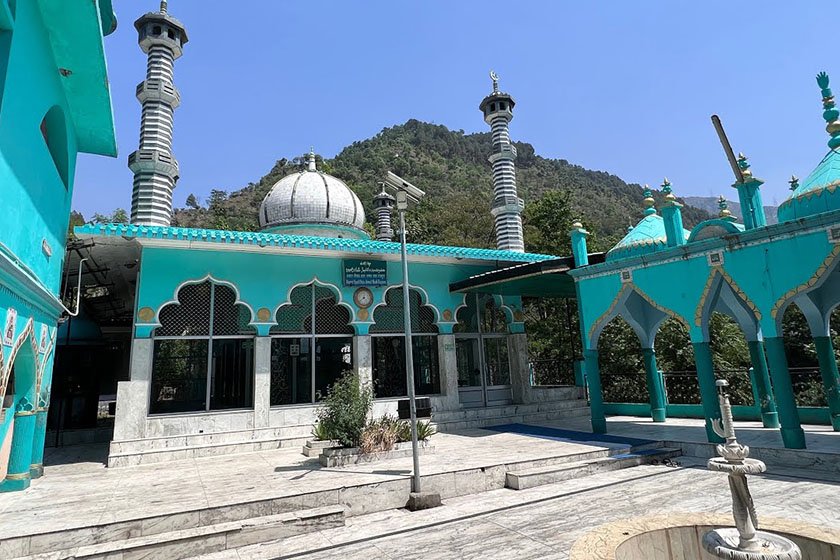
Jamal Shah Peer Baba Dargah at Rajpura is one such place. It is associated with Hazrat Syed Data Jamal Shah / Peer Baba Jamal Shah, a Sufi figure remembered locally with deep respect. Unlike the large dargahs of the plains, this is a mountain darbar with a more intimate presence — a place where the saint’s memory lives through ziyarat, chadar, dua, and the everyday trust of people who come with burdens they cannot carry alone.
🌄 Location & How to Reach It
Jamal Shah Peer Baba Dargah is located at Rajpura, near Chamba town in Himachal Pradesh. Rajpura lies within the wider Chamba region, where the old town, Ravi valley, surrounding villages, and sacred sites form a close cultural landscape. The dargah is not a remote high-altitude pilgrimage point; it belongs more to the local Chamba circuit, where people from nearby areas visit for prayer and reverence.
Google Maps: Get Directions
Elevation: The exact elevation of the dargah is not consistently published in reliable public sources. It is safest to understand it as part of the lower Chamba town-region rather than a high-altitude shrine.
- By road: Chamba is connected by road with Dalhousie, Pathankot, Banikhet, Bharmour, and surrounding areas. From Chamba town, visitors should ask locally for the Rajpura route and the exact dargah approach.
- By rail: The nearest major railway station is Pathankot, from where travellers continue by road towards Chamba.
- By air: The nearest commonly used airports are Pathankot Airport and Kangra / Gaggal Airport, followed by road travel to Chamba.
This is not a trekking shrine. The visit is best planned as a local Chamba-region stop, with directions confirmed from residents or drivers who know Rajpura.
🌸 Best Time to Visit
Jamal Shah Peer Baba Dargah can generally be visited through most of the year, because it is not located on a remote snowbound pass or a difficult mountain trek. The most comfortable months are usually March to June and September to November, when Chamba’s weather is pleasant and road travel is easier.
The monsoon months may bring rain, fog, and road delays in the wider district, especially if one is travelling from outside Chamba. Winter is usually manageable in the lower Chamba region, but cold mornings and evenings should be expected.
For a dargah visit, the best time is usually during daylight or during locally observed prayer and gathering times. Exact visiting hours, Urs dates, or special event schedules should be confirmed locally. Public sources do not provide a stable official calendar for this dargah, so it is better not to plan around a fixed date unless someone from Rajpura or Chamba confirms it.
🕋 A Sufi Shrine in a Temple Town
Chamba’s sacred identity is often spoken of through temples. That is natural, because the town has a deep and visible temple tradition. But the presence of Jamal Shah Peer Baba Dargah reminds us that mountain faith has never been only one thing.
A dargah is not built around an idol or a temple sanctum. It is centred on the resting place and spiritual memory of a saint. People visit to offer dua, place a chadar, sit quietly, seek blessings, and remember a life believed to have been close to God. The atmosphere is different from a temple, but the human need is familiar: protection, healing, peace, gratitude, and relief from trouble.
At Rajpura, Jamal Shah Peer Baba is remembered with affection and reverence. Local references use names such as Hazrat Syed Data Jamal Shah and Peer Baba Jamal Shah, showing the respect attached to him in devotional language. The word Data itself carries a feeling of generosity — one who gives, helps, or blesses. Whether one comes from a Muslim household, a Hindu family, or another background, the dargah is approached as a place where the saint’s compassion is still remembered.
🌙 The Saint Remembered as Data Jamal Shah
The public record around Jamal Shah Peer Baba is thin, and that matters. Not every sacred site has inscriptions, official plaques, old gazetteers, or museum-style documentation. Many local dargahs survive through oral memory, family devotion, annual visits, and the stories carried by people who have prayed there.
Jamal Shah Peer Baba is locally remembered as a Sufi saintly figure associated with Rajpura and Chamba. The use of titles like Hazrat, Syed, Data, and Peer Baba shows how the saint is placed within a devotional vocabulary of respect. These words are not decorative. They express rank, affection, lineage, and spiritual nearness.
In Sufi tradition, a saint is not remembered only for doctrine. He is remembered for presence. The question is not simply, “When was the shrine built?” but “Why do people still come?” At Jamal Shah Peer Baba Dargah, the answer appears to lie in trust. People come because the place has become part of Chamba’s living faith map.
This is why the article must be careful. It would be easy to invent a neat biography, a fixed century, a dramatic miracle, or an official lineage. But that would not respect the shrine. Where documentation is thin, the honest approach is to treat the dargah as a living local sacred place, with its history preserved mainly through devotion and oral tradition.
🤲 What Devotees Seek Here
People visit dargahs for many reasons. Some come with illness in the family. Some come before an important decision. Some come after a wish is fulfilled. Some come without asking for anything, simply to offer respect. At Jamal Shah Peer Baba Dargah, the tone is one of quiet appeal rather than spectacle.
Devotees may offer chadar, flowers, incense, or simple prayers. Some may sit near the shrine in silence. Others may tie their hopes to the saint’s memory through personal vows. In many Sufi shrines across India, the act of visiting itself becomes a form of surrender: a person leaves behind noise, pride, and helplessness for a few moments and stands before a presence believed to be merciful.
The dargah is also important because it appears to be respected across communities. Such places have a special role in Himachal’s sacred culture. They do not erase religious difference, but they create shared ground. A Hindu devotee may come with folded hands. A Muslim devotee may come with Fatiha. A traveller may come with curiosity. The darbar receives them through a language older than labels: faith, humility, and hope.
🏛️ The Architecture of a Small Darbar
Jamal Shah Peer Baba Dargah should not be judged by the scale of major Sufi centres like Ajmer Sharif or large Punjab dargahs. Its strength is local. A small shrine can carry deep reverence without needing monumental architecture.
The typical experience of such a mountain dargah is intimate: a modest structure, the resting place of the saint, cloth offerings, incense, prayerful silence, and the presence of caretakers or local devotees. The architecture is not meant to overwhelm. It is meant to hold a memory.
In many dargahs, the visual language is simple but meaningful. Green cloth, chadar, prayer flags or cloth strips, lamps, fragrance, and calligraphic or devotional elements create an atmosphere distinct from surrounding village life. The visitor steps from ordinary ground into a space of spiritual address.
At Rajpura, the most important architectural detail is not a carved tower or royal patronage. It is the darbar’s relationship with the community. The shrine survives because people continue to come. The building protects the memory, but devotion keeps it alive.
📜 Rajpura, Chamba, and the Shared Sacred Landscape
Rajpura’s importance here comes from its closeness to Chamba’s larger spiritual world. Chamba is a district where village deities, Shakti shrines, Shiva temples, local fairs, Buddhist influences in the wider region, and Sufi memories all exist within the same cultural landscape.
This should not be reduced to a slogan. Shared sacred places are not meaningful because they make all traditions identical. They are meaningful because they allow people to approach the sacred in different ways while still recognising each other’s devotion.
Jamal Shah Peer Baba Dargah adds a Sufi note to Chamba’s religious map. It reminds us that Chamba’s spiritual history is not only preserved in stone temples and royal legends. It also lives in shrines where a saint is remembered through healing, dua, and the trust of ordinary people.
Such places are often under-documented online, but deeply known locally. A traveller who only searches for famous monuments may miss them. A traveller who asks, listens, and slows down may discover why they matter.
🕯️ Urs, Ziyarat, and Local Devotion
- Ziyarat: The central act of visiting a dargah is ziyarat — coming to pay respect at the saint’s resting place and seek blessings through prayer.
- Chadar offering: Devotees may offer a chadar as a sign of reverence, gratitude, or a personal vow.
- Dua and Fatiha: Visitors may recite prayers, ask for relief, remember the saint, and pray for family well-being.
- Urs: Many Sufi dargahs observe an Urs, marking the saint’s union with the Divine. Public sources do not provide a stable verified Urs date for this dargah, so dates should be confirmed locally in Rajpura or Chamba.
- Interfaith reverence: The dargah is locally respected as a place where people of different backgrounds may come for blessings.
- Quiet conduct: Visitors should cover their head if local custom requires it, remove footwear where asked, and avoid loud photography or casual behaviour near the shrine.
🏞️ While You’re in the Area
- Chamba Town: The natural base for visiting Rajpura. Chamba offers old temples, markets, river views, and the historic atmosphere of a former hill-state capital.
- Lakshmi Narayan Temple Complex: One of Chamba’s most important temple groups, known for its Shikhara-style architecture and long sacred association with the town.
- Champavati Temple: A temple tied to Chamba’s founding memory and the story of Princess Champavati.
- Bhuri Singh Museum: A useful stop for understanding Chamba’s paintings, inscriptions, royal history, craft traditions, and cultural depth.
- Chaugan: The open heart of Chamba town, connected with festivals, walking routes, and the everyday public life of the town.
- Hari Rai Temple: A historic Vaishnavite shrine in Chamba, known for its old stone temple character.
- Chamunda Devi Temple: A goddess shrine that gives a wider view of Chamba’s sacred landscape and hill-town setting.
🙏 Getting in Touch
There is no widely verified official website, booking system, or public temple-style office contact for Jamal Shah Peer Baba Dargah in available public sources. Visitors should ask locally in Rajpura or Chamba town for the current approach, prayer customs, Urs information, and caretaker availability.
If planning a visit for a specific gathering, do not rely only on old videos or social posts. Confirm locally before travelling, especially if coming from outside Chamba.
As with all dargahs, visit respectfully. Remove footwear where required, cover your head if local custom asks for it, avoid entering restricted areas, and ask before taking photographs.
❓ Quick Questions Travellers Ask
Where is Jamal Shah Peer Baba Dargah located?
It is located at Rajpura, near Chamba town in Himachal Pradesh.
Who is the dargah dedicated to?
The dargah is associated with Hazrat Syed Data Jamal Shah / Peer Baba Jamal Shah, remembered locally as a Sufi saintly figure.
Is this a temple or a dargah?
It is a dargah, meaning a Sufi shrine connected with the resting place and spiritual memory of a saint.
Can people of all religions visit?
Yes. Like many Sufi shrines in India, the dargah is approached by people from different communities for prayer, respect, and blessings.
Is there a fixed Urs date?
A verified public Urs date is not consistently available online. Confirm locally in Rajpura or Chamba before planning around Urs.
Is it difficult to reach?
It is not a trek-based shrine. It is best visited as a local Chamba-region sacred site, with exact directions confirmed from local residents.
What should visitors offer?
Common dargah offerings may include chadar, flowers, incense, or simple prayer. Follow local custom and avoid unnecessary display.
Are photos allowed?
Ask before taking photographs, especially near the inner shrine or during prayer.
Can it be combined with Chamba sightseeing?
Yes. It can be combined with Chamba town, Lakshmi Narayan Temple, Bhuri Singh Museum, Chaugan, and other nearby sacred sites.
What is the best time to visit?
The comfortable travel months are generally March to June and September to November, though local visits are possible through much of the year.
A Last Word
Jamal Shah Peer Baba Dargah does not announce itself like a great monument. Its importance is quieter. It belongs to the kind of sacred geography that is easy to overlook because it is not built for spectacle.
But places like this carry a different strength. They hold the prayers of people who come without headlines, without tourism brochures, and often without leaving any written record. A mother may come for her child. A driver may stop before a journey. A family may return after a wish is fulfilled. Someone may sit silently because words are no longer enough.
In Rajpura, the memory of Jamal Shah Peer Baba remains part of Chamba’s wider faith. Temples may give the town its skyline, but the dargah gives it another note — soft, Sufi, and deeply human.
Fact-check note: Publicly available information on Jamal Shah Peer Baba Dargah, Rajpura, is limited compared with Chamba’s better-documented temples. Available references consistently connect the shrine with Rajpura near Chamba and identify it with Hazrat Syed Data Jamal Shah / Peer Baba Jamal Shah. Exact founding date, saintly biography, Urs calendar, architectural details, and official contact information are not firmly verified in accessible sources, so this article avoids inventing them. Devotional practices such as ziyarat, chadar, dua, and Urs are explained in the general context of Sufi dargah traditions and should be confirmed locally for this specific shrine before planning a visit around rituals or events.