Near Nahan, a quiet Shiva shrine keeps one of Sirmaur’s strangest legends — a stairway to heaven begun by Ravana, interrupted by sleep, and left behind as faith.
Some temples are remembered for kings, inscriptions, or carved stone. Paudiwala Shiv Temple is remembered for an unfinished act. Local tradition says that Ravana, the great devotee of Lord Shiva, tried to build a path to heaven in one night, and Paudiwala became one of those sacred steps. The temple stands near Nahan in Sirmaur district, not as a grand architectural monument, but as a living village shrine where myth still feels close to the earth. It is a place of Lord Shiva, forest shade, Shivratri crowds, and stories that have travelled by memory more than by stone records.
🌄 Location & How to Reach It
Paudiwala Shiv Temple is located near Nahan in Sirmaur district, close to the Amwala–Sainwala / Khajurna–Moginand side of the Nahan–Kala Amb belt. Local reports place the temple near the Paonta Sahib–Kala Amb National Highway, about 2 km inside from the main highway, while other travel references commonly describe it as around 6–8 km from Nahan town. The approach is short, but the temple feels slightly withdrawn from the road, with trees and low Shivalik terrain giving it a quieter setting than the busy highway nearby.
Google Maps: Get Directions
- By road: The easiest access is from Nahan, by local taxi, private vehicle, or local route towards Kala Amb / Moginand. From the highway, a short inner road leads towards the temple area.
- By rail: The nearest practical railheads are Kalka, Chandigarh, and Ambala, followed by road travel to Nahan and then onwards to Paudiwala.
- By air: The nearest practical airports are Chandigarh and Dehradun, both requiring onward road travel into Sirmaur.
For most visitors, Paudiwala is an easy half-day sacred stop from Nahan rather than a difficult hill pilgrimage.
🌸 Best Time to Visit
The temple can be visited through most of the year, but the most comfortable months are October to March, when the lower Sirmaur belt is cooler. Summer afternoons can be warm around Nahan and Kala Amb, so morning or late afternoon is better for a quieter visit.
The most important devotional time is Maha Shivratri, when Paudiwala receives a much larger number of devotees. Local reporting notes that pilgrims come not only from Himachal Pradesh but also from neighbouring states during Shivratri.
Monsoon makes the surrounding area green, but hill-road caution is still useful after heavy rain. There is no need to assume fixed formal visiting hours unless you are planning a specific puja. For a normal visit, arrive during daylight, ask locally if needed, and treat the shrine as an active local temple.
🕉️ The Stairway Ravana Left Behind
The most famous legend of Paudiwala begins with Ravana, not as the king of Lanka alone, but as a fierce devotee of Lord Shiva. In local belief, Ravana wanted to attain immortality and began creating five stairways to heaven in a single night. The first is often associated in folk telling with Har Ki Pauri at Haridwar, while Paudiwala is remembered as the second stair, giving the temple its popular title: “Swarg ki Dusri Seedhi” — the second stairway to heaven.
The story has the shape of many old Himalayan legends: an impossible task, a divine condition, a night of intense work, and an interruption before completion. Ravana could not finish all five before dawn. The work remained incomplete, and Paudiwala became sacred not because the stairway reached heaven, but because it marked the point where ambition, devotion, and limitation met.
This is not a historical claim in the modern sense. There is no inscription proving Ravana built anything here. But the legend matters because it tells us how the temple is understood locally. Paudiwala is not just another Shiva shrine near Nahan. In the memory of devotees, it is a place where a cosmic attempt was made and left unfinished.
🕉️ A Shivling That Devotees Say Still Grows
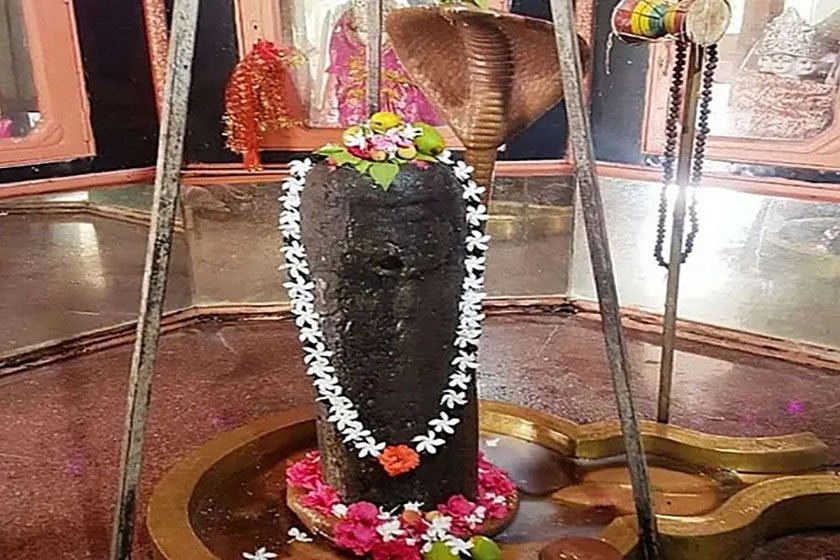
Another belief associated with Paudiwala concerns the Shivling itself. Local and travel accounts often describe the temple’s Shivling as swayambhu, or self-manifested, and repeat the belief that its size increases by the measure of a grain of rice on Shivratri.
This claim should be handled carefully. It belongs to faith and oral tradition, not measurable public documentation. But inside the temple’s devotional world, the idea is powerful. It suggests that Shiva’s presence here is not static. The lingam is seen as living, growing, and responding to time.
Such beliefs are common around older Shiva shrines in the hills. A stone, a lingam, a spring, or a cave becomes sacred because people experience it as alive. Whether a visitor accepts the miracle literally or not, the belief explains why Paudiwala draws strong local devotion, especially during Shivratri.
🙏 What Paudiwala Shiv Temple Is Known For
Paudiwala is known mainly for its association with Lord Shiva, the Ravana stairway legend, and the sacred belief attached to its Shivling. It is often referred to locally as Paudiwala Mahadev or Pauri Wala Shiv Mandir, depending on spelling and pronunciation.
For devotees, the temple is a place for offering water, milk, bel leaves, flowers, and prayers to Lord Shiva. During Shivratri, the shrine becomes busier and more public, with pilgrims arriving for darshan and offerings. On ordinary days, it has a quieter feel — the kind of place where local people may come for a simple bow, a prayer, or a family visit.
Paudiwala’s distinctiveness lies in its myth rather than scale. It is not as widely known as Renuka Ji, not as geographically dramatic as Churdhar, and not as large as major pilgrimage centres. Its strength is the local story: a small temple carrying a large cosmic imagination.
🏛️ The Temple in the Trees
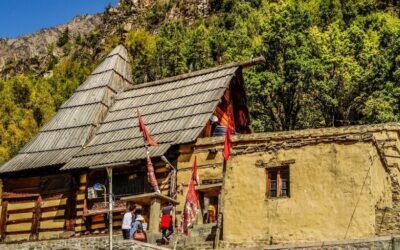
Paudiwala does not need to be described as a grand monument to be meaningful. Its atmosphere comes from its setting near the wooded lower hills outside Nahan. The temple area feels separated from the main road by just enough distance for the noise to soften. The land here is not high Himalayan country; it is the warmer Shivalik belt of Sirmaur, where forests, villages, highways, and old shrines often sit close together.
The temple’s visual character is simple. Visitors come for the Shivling and the legend more than for elaborate architecture. During quiet hours, the experience is shaped by small details: the shade around the shrine, the sound of bells, the smell of incense, the movement of devotees, and the sudden stillness that can appear even near a busy road corridor.
This simplicity suits the legend. A stairway to heaven does not survive here as a visible stone staircase reaching the sky. It survives as a name, a belief, and a Shiva shrine where people still come to complete, through prayer, what the story says Ravana could not complete through force.
📜 Nahan, Sirmaur, and the Older Sacred Belt
Paudiwala belongs to the sacred geography around Nahan, the old hill town and district headquarters of Sirmaur. This region is full of layered religious memory: local devta traditions, Shiva shrines, Devi temples, Sikh pilgrimage routes towards Paonta Sahib, and the great mother-son sacred landscape of Renuka Ji.
District Sirmaur’s official profile describes the region as part of the outer Himalayas / Shivalik range, a landscape known for temples, forests, wildlife, and hill culture. Paudiwala fits this setting well. It is not isolated in a high valley; it belongs to the lower Himalayan belt where sacred places often stand near old routes, villages, and market roads.
This also explains why Paudiwala draws people from nearby plains as well as from Himachal. Nahan is close enough to Haryana, Uttarakhand, Chandigarh, and western Uttar Pradesh for devotees to come by road, especially during Shivratri. The temple’s fame has travelled through local belief, news reports, reels, and word of mouth rather than through a long line of academic documentation.
🎉 Festivals and Devotion
- Maha Shivratri: The main devotional occasion at Paudiwala. Local reports mention large numbers of devotees visiting the temple during Shivratri, including pilgrims from neighbouring states.
- Daily Shiva worship: Devotees offer prayers to Lord Shiva in the form of the Shivling. Offerings usually follow the familiar Shiva tradition of water, milk, flowers, bel leaves, and quiet prayer.
- Ravana legend remembrance: The title “Swarg ki Dusri Seedhi” remains central to the temple’s identity and is repeated in local accounts and visitor descriptions.
- Local family visits: Outside major festival days, Paudiwala works like a living local shrine, visited by families and devotees from Nahan and nearby villages.
- Festival planning note: During Shivratri, expect more crowding, traffic, and roadside activity. If you want silence, choose an ordinary weekday morning outside festival time.
🏞️ While You’re in the Area
- Nahan Town: The natural base for visiting Paudiwala, with markets, old lanes, Rani Tal, and access to other Sirmaur routes.
- Rani Tal, Nahan: A small lake and garden area inside Nahan, useful for a short family stop before or after temple visits.
- Jaitak Fort: A historically important site above Nahan, connected with the Gorkha period and offering a different view of Sirmaur’s past.
- Renuka Ji: One of Sirmaur’s most important sacred landscapes, associated with Mata Renuka and Lord Parshuram, best planned as a separate half-day or full-day trip.
- Paonta Sahib: A major Sikh pilgrimage town on the Yamuna, often combined with lower Sirmaur travel routes.
- Suketi Fossil Park: A family-friendly heritage stop, especially useful for travellers moving between Nahan, Kala Amb, and nearby routes.
🙏 Getting in Touch
There is no widely verified official visitor centre, phone number, or booking system for Paudiwala Shiv Temple. For puja details, Shivratri arrangements, or local access conditions, ask in Nahan, Moginand, Amwala–Sainwala, or near the highway approach.
For an ordinary visit, no formal booking is needed. Arrive in daylight, park respectfully, avoid blocking the inner road, and keep the temple area clean.
❓ Quick Questions Travellers Ask
Where is Paudiwala Shiv Temple located?
It is near Nahan in Sirmaur district, close to the Nahan–Kala Amb / Paonta Sahib–Kala Amb road belt.
How far is Paudiwala Shiv Temple from Nahan?
Most local and travel references place it around 6–8 km from Nahan town, with the temple lying a short distance inside from the main highway.
Why is it called “Swarg ki Dusri Seedhi”?
Local tradition says Ravana tried to build five stairways to heaven in one night, and Paudiwala is remembered as the second stairway.
Which deity is worshipped here?
The temple is dedicated to Lord Shiva, worshipped here in the form of a Shivling.
Is Paudiwala difficult to reach?
No. It is a road-accessible temple near Nahan and can be visited easily by taxi or private vehicle.
A Last Word
Paudiwala Shiv Temple is not a place where evidence and legend stand neatly apart. They overlap, as they often do in old hill shrines. The road may bring you close, the temple may look simple, and the visit may take only a short time. But the story it carries is large: Ravana working through the night, Shiva watching, a stairway left incomplete, and a small shrine near Nahan keeping that unfinished effort alive.
In the end, Paudiwala is powerful because it does not show everything. It asks the visitor to listen to what people have remembered. A stairway to heaven may not be visible in stone, but in Sirmaur’s sacred imagination, one of its steps still rests here, under the gaze of Lord Shiva.
Fact-check note: Paudiwala Shiv Temple’s location near Nahan in Sirmaur district, close to the Amwala–Sainwala / Nahan–Kala Amb side, is supported by local reporting and travel references. Distances vary: some sources describe it as about 6–8 km from Nahan, while a Jagran report places the ancient Shiva temple about 2 km from the Paonta Sahib–Kala Amb National Highway near Amwala–Sainwala. The Ravana “second stairway to heaven” legend and the belief about the Shivling growing on Shivratri are treated here as local sacred tradition, not documented history. No verified official temple contact number, GPS coordinate, construction date, or inscriptional record was found in the checked sources, so those details have not been forced.