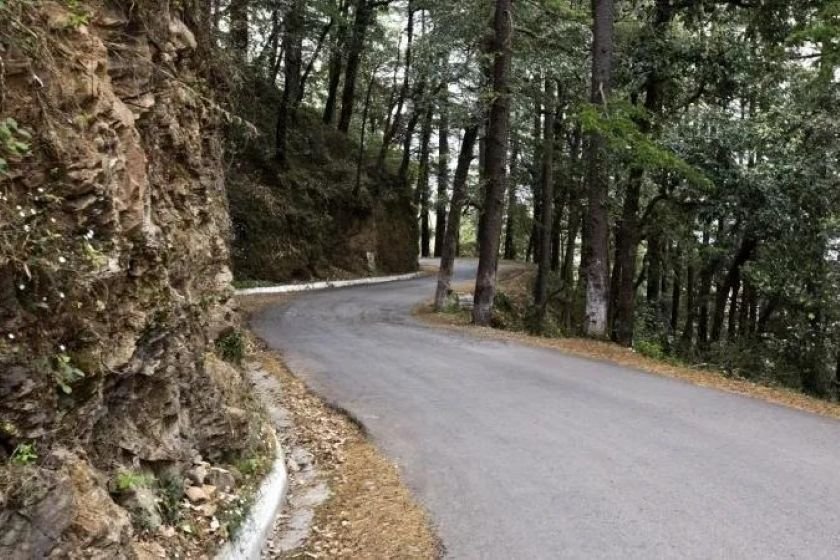
The road looks harmless in daylight.
It curves quietly between forested slopes, scattered homes and long stretches where the mountains seem to swallow every sound. Vehicles pass through without slowing, and the surrounding trees appear no different from those lining hundreds of other roads in the Shimla hills.
But after sunset, Kingal Road is said to change.
The forest becomes a wall of darkness. Headlights illuminate only the next bend, leaving everything beyond it hidden. Mist drifts across the road without warning, and small points of light sometimes appear between the trees.
Some drivers say the lights remain still.
Others claim they move beside the vehicle.
A few insist that the lights disappear the moment the driver turns to look directly at them.
Kingal Road has developed a reputation as one of the lesser-known haunted roads of Shimla district. Its story is not built around a famous building, a documented tragedy or one universally recognised ghost. Instead, it survives through accounts of strange lights, indistinct figures, unexplained whispers and the uneasy feeling that someone is standing just beyond the reach of the headlights.
No reliable evidence proves that anything supernatural occurs here.
Yet on a lonely mountain road after dark, certainty can disappear as quickly as the light around the next bend.
Kingal Road at a Glance
| Detail | Information |
|---|---|
| Location | Kingal area, Shimla district, Himachal Pradesh |
| Nearest known centres | Kumarsain and Narkanda region |
| Type of place | Mountain road passing through a rural forested area |
| Haunted character | Strange lights, shadowy figures and unexplained roadside sounds |
| Best time to travel | Daylight hours |
| Night travel | Better avoided unless necessary |
| Main concern | Isolation, darkness, fog and mountain-road conditions |
| Ideal for | Folklore readers and travellers interested in haunted-road stories |
The Light Around the Bend
The best-known story connected with Kingal Road begins with a light.
A driver travelling after dark notices a faint glow ahead. At first, it appears to be the headlamp of an approaching motorcycle or a torch carried by someone walking along the roadside.
The driver continues towards it.
But the distance between the vehicle and the light never seems to decrease.
The light moves around the bends, remaining just far enough ahead to be visible but never close enough to identify.
Then it suddenly disappears.
There is no side road.
No house.
No person standing nearby.
Only trees and darkness.
In another version of the story, the light does not appear ahead of the vehicle. It emerges among the trees and begins moving beside the road.
The driver increases speed.
The light keeps pace.
When the vehicle slows, the light also slows.
It continues until the road enters a more populated area, where it vanishes as suddenly as it appeared.
Stories about unexplained lights are common in isolated mountain regions. They may be caused by distant vehicles, reflections, villagers carrying torches, electrical lights seen through trees or atmospheric conditions that distort distance.
But the people who tell the Kingal Road story insist that these lights behave differently.
They do not merely appear.
They follow.
The Figure Beside the Trees
Another story speaks of a figure standing near the forest edge.
Drivers describe seeing what appears to be a person beside the road, usually near a bend or a darker section where the trees grow close to the tarmac.
The figure does not wave or ask for help.
It simply stands there.
In the first glance, there is nothing extraordinary about it. A person waiting beside a rural road at night may be unusual, but not impossible.
The unease begins when the vehicle draws closer.
The figure appears too still.
Its face cannot be seen.
The headlights fall across the roadside, but the body remains strangely unclear—as though it belongs more to the darkness than to the road.
Some versions describe the figure as wearing pale clothing. Others remember only a tall shadow with no recognisable features.
The driver passes without stopping.
A few seconds later, curiosity overcomes fear.
The driver looks into the rear-view mirror.
The road is empty.
There is no figure beneath the headlights.
Nothing moving towards the nearby village.
No one standing where the person had been moments earlier.
Only an empty bend fading into darkness.
The Whisper Outside the Window
The most disturbing Kingal Road stories do not involve anything visible.
They begin with a sound.
A person drives through a quiet section with the windows closed. The engine is running normally, and no other vehicle is nearby.
Then someone whispers close to the passenger-side window.
The words cannot be understood.
The driver looks towards the seat, but no one is there.
The whisper comes again.
This time it seems to move from the side of the vehicle towards the rear, as though someone outside is walking alongside the car.
The driver accelerates.
The sound stops.
Later, when the vehicle reaches an inhabited area, nothing unusual is found. There are no marks on the body, no passenger hiding in the rear seat and no explanation for how a person could have kept pace beside a moving vehicle.
These stories are difficult to verify. A loose window seal, moving branches, wind pressure or tyres travelling over different road surfaces can create sounds resembling a human voice.
Fear can also transform an unclear noise into something meaningful.
Still, a whisper is difficult to forget once it sounds as though it knows exactly where you are sitting.
A Road Without One Beginning
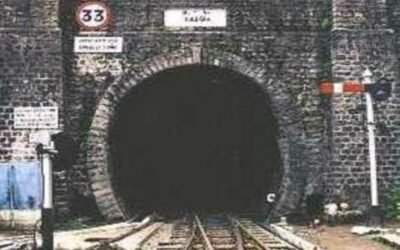
Unlike Barog Tunnel or Dagshai Jail, Kingal Road does not have a widely documented historical event that clearly explains its haunted reputation.
There is no single accepted account of a murder, accident or tragedy from which every story begins.
The legend appears to have grown gradually.
One driver saw a light.
Another heard a voice.
Someone else noticed a figure beside the road.
Each account added another detail until Kingal Road became associated with unexplained events after dark.
This is how many roadside legends develop.
A dangerous bend causes an accident. A patch of fog makes a vehicle appear and disappear. Headlights reflect from wet leaves. A person walking home becomes a shadow in someone else’s story.
Years later, no one remembers the first incident.
They remember only the warning:
Do not stop on that road at night.
The Driver Who Looked Back
One version of the Kingal Road legend tells of a driver returning late at night.
The road was nearly empty, and mist had begun forming across the lower bends. As the vehicle entered a forested section, the driver noticed a pale figure in the rear-view mirror.
At first, he assumed someone was sitting in the back seat.
He turned immediately.
The seat was empty.
When he faced the road again, the figure remained visible in the mirror.
It appeared to be sitting directly behind him.
The driver did not turn a second time.
He continued driving, keeping his eyes on the road while refusing to look into the mirror. After reaching a cluster of houses, he finally stopped beneath a streetlight.
The rear seat was still empty.
The figure had disappeared.
The story has no named witness, recorded date or verifiable report. It belongs to the kind of oral folklore that changes whenever it is retold.
In one version, the figure is a woman.
In another, it is an elderly man.
Some storytellers say nothing appears in the mirror at all. The driver only feels the seat behind him sink, as though an unseen passenger has entered the vehicle.
The details change.
The fear remains the same.
Why Mountain Roads Create Ghost Stories
Mountain roads naturally create the conditions in which supernatural stories flourish.
There are long stretches without houses or streetlights. Dense trees limit visibility, while steep slopes prevent drivers from seeing what lies beyond the next bend.
Fog can form quickly and reduce familiar objects to moving shapes.
A roadside milestone may resemble a person.
A reflective sign may appear to float in the darkness.
A vehicle on another level of the mountain can produce lights that seem to move through the forest without following any visible road.
Sound behaves differently as well.
A dog barking from a distant village may seem close. Voices from homes below the road may rise through the valley. Wind passing through pine and deodar trees can resemble breathing, footsteps or whispering.
When a driver is tired, alone and concentrating on a difficult road, the mind becomes unusually alert.
Every movement matters.
Every shadow may be a person.
Every unexpected light may appear to be following.
The Problem with Flickering Lights
Strange lights are central to the Kingal Road legend, but several ordinary explanations are possible.
Headlights from vehicles on a higher or lower road can appear between trees and disappear whenever the route curves.
Moisture, fog and wet road surfaces can reflect light in unexpected directions. A small light source may appear much larger or closer than it really is.
Homes hidden behind the forest may be visible only through occasional gaps between the trees. As a vehicle moves, the light seems to switch on and off.
Motorcycles travelling around distant bends can also create the impression of a single light moving without a visible vehicle.
None of these explanations proves what an individual driver saw.
They show how easily a mountain landscape can create something that feels impossible.
When Fear Becomes Part of the Road
Once a place becomes known as haunted, every journey through it changes.
A driver who has heard nothing about Kingal Road may pass through without noticing anything unusual.
Another driver who already knows the legend begins watching the forest.
The person checks the mirrors more frequently.
Every light receives attention.
Every branch touching the vehicle sounds deliberate.
Every empty bend becomes the place where something might be waiting.
This does not mean that people are inventing their experiences. Fear can be real even when its cause is uncertain.
The road, darkness and expectation work together.
By the time the journey ends, the traveller may no longer know which part of the experience came from the landscape and which part came from the story.
Travelling Through the Kingal Area
Kingal is a rural settlement in Shimla district, generally associated with the Kumarsain and Narkanda side of the region.
The surrounding roads pass through mountain villages, forested slopes and apple-growing areas. Travellers should not confuse local Kingal routes with better-known haunted roads inside Shimla city.
Road names and route descriptions may vary locally, so travellers should confirm directions with residents rather than relying only on informal haunted-place listings.
The area should be approached as a normal inhabited mountain region, not as an abandoned paranormal destination.
People live, work and travel along these roads.
Visitors should not disturb residents, block traffic or enter private land while searching for locations mentioned in ghost stories.
How to Reach Kingal
By Road
Kingal lies in Shimla district and is generally approached through the Narkanda–Kumarsain side of the upper Shimla region.
The precise route depends on the traveller’s starting point and the local road being referred to as Kingal Road.
From Shimla, travellers normally proceed towards Narkanda and Kumarsain before taking the appropriate local connection towards Kingal.
Because mountain roads may be affected by construction, snow, landslides or seasonal damage, verify the route locally before departure.
By Bus
Government and private buses operate on several routes connecting Shimla with Narkanda, Kumarsain and surrounding settlements.
Direct services to smaller villages may be limited or operate only at particular times. Confirm the latest bus schedule at the relevant station.
By Train
Shimla railway station is the nearest major station on the Kalka–Shimla narrow-gauge railway.
From Shimla, the onward journey towards Kingal is by road.
By Air
Shimla Airport at Jubbarhatti is the nearest airport serving the wider region, although flight schedules can be limited and weather-dependent.
Chandigarh Airport provides broader connectivity but requires a longer road journey.
Best Time to Travel
April to June and September to November generally offer comfortable conditions for travelling through the upper Shimla region.
Winter may bring snow, ice and poor visibility. Local roads can become slippery, and some sections may be temporarily affected by weather.
The monsoon creates a green and dramatic landscape, but heavy rain increases the risk of fog, landslides, falling stones and road blockages.
For ordinary sightseeing, travel during daylight.
The road does not become more interesting simply because it is dark. It becomes more dangerous.
Road Safety Matters More Than the Legend
The real risks on Kingal Road are more immediate than any ghost story.
These may include:
- sharp and unfamiliar bends;
- poor visibility after dark;
- fog and low cloud;
- loose stones and landslide debris;
- animals crossing the road;
- limited street lighting;
- approaching vehicles using high beams;
- slippery surfaces during rain, frost or snowfall;
- tired or distracted driving.
Do not stop in the middle of the road to photograph lights or shadows.
Avoid walking alone along isolated sections at night.
Never leave a vehicle on a blind curve.
Do not follow an unexplained light into the forest or onto private property.
In an emergency, move to a safe visible location and contact local authorities or residents.
Is Kingal Road Really Haunted?
There is no verified evidence proving that Kingal Road is haunted.
Its reputation rests mainly on repeated stories of strange lights, shadowy figures, whispers and unsettling experiences after dark.
Some of these incidents may have straightforward explanations involving fog, reflections, distant vehicles, forest sounds and fatigue.
Others remain personal experiences known only to the people who claim to have witnessed them.
The absence of proof does not end the story.
It is often what keeps a haunted-road legend alive.
Frequently Asked Questions
Where is Kingal Road located?
Kingal is in Shimla district, in the upper Shimla region associated with the Kumarsain and Narkanda side. Local route names should be confirmed before travelling.
Why is Kingal Road considered haunted?
The road is associated with stories of unexplained lights, roadside figures, whispers and the feeling of being followed after dark.
Is there a confirmed ghost story behind the road?
No single documented incident explains the entire legend. The haunted reputation appears to have grown from different accounts shared over time.
Are the strange lights real?
People have reported seeing unusual lights, but there is no verified paranormal explanation. Reflections, distant vehicles, homes behind trees, fog and atmospheric conditions may account for some sightings.
Can tourists visit Kingal Road at night?
It is a public road rather than a formal tourist attraction. Unnecessary night travel is not recommended because of darkness, bends, fog and changing mountain-road conditions.
Is Kingal Road close to Shimla city?
Kingal is in Shimla district but should not be treated as a road within central Shimla. It lies towards the upper Shimla region.
Is it safe to stop and investigate the haunted location?
No. Do not stop on blind bends, walk into forests, block traffic or enter private land. Road safety and respect for residents must come first.
The Light That Never Comes Closer
Most roads reveal what lies ahead.
Kingal Road seems to hide it.
During the day, it is a mountain route passing through villages, trees and cultivated slopes. After dark, the same bends become openings into uncertainty.
A light appears ahead.
You drive towards it.
The road turns.
The light remains visible.
Another bend comes, but you are no closer.
Then the forest opens for a moment.
There is no vehicle.
No house.
No one carrying a torch.
Only an empty road continuing into the darkness.
You tell yourself it was a reflection.
You keep driving.
And somewhere behind you, a second light appears.