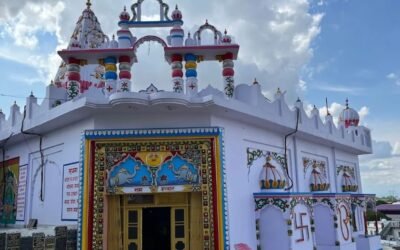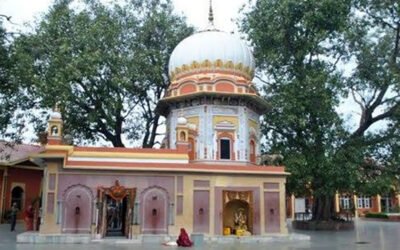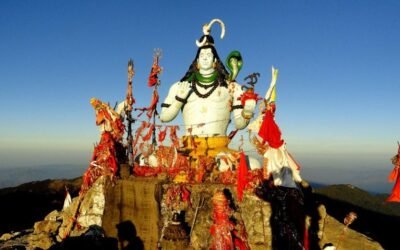
On the Kotdhar side near Shahtalai, Bachretu remembers Lord Shiva not through a grand temple alone, but through water, forest quiet, and a local legend that joins Mahadev with Baba Balak Nath.
Some sacred places in Himachal are known because they are large. Some because they are ancient monuments. Some because pilgrims arrive in thousands. Shiv Boadi Temple at Bachretu belongs to a quieter category. Its importance comes from a spring, a Shiva shrine, a forested hill setting, and a local story that connects it with Baba Balak Nath, one of the most widely revered saints of the lower Himachal hills.
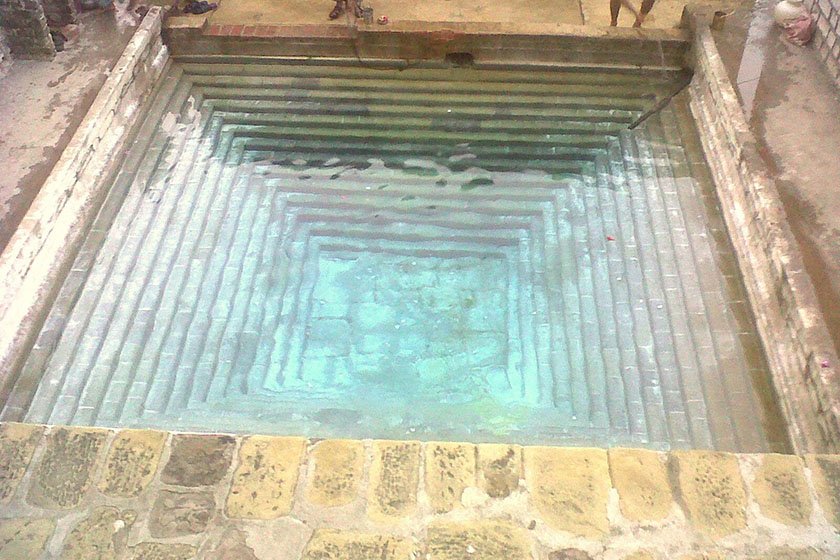
The word boadi or bawdi points to water — a spring, stepwell, or sacred water source. That detail is central to the temple’s character. This is not only a place where Lord Shiva is worshipped. It is a place where water, tapasya, and local belief come together. Near the old Bachhretu Fort and not far from Shahtalai, the temple stands inside a landscape where history, pilgrimage, and village faith are closely linked.
🌄 Location & How to Reach It
Shiv Boadi Temple is located at Bachretu / Bachhretu in Bilaspur district, Himachal Pradesh, near the Shahtalai side of the Kotdhar region. Bachretu is known for its peaceful hill setting and for the nearby remains of Bachhretu Fort, which stands on the western slope of Kotdhar. The area lies close to Shahtalai, an important place in the Baba Balak Nath pilgrimage circuit.
Google Maps: Get Directions
Elevation: Bachhretu is generally described as around 3,000 ft above sea level.
- By road: Bachretu is approached from the Shahtalai side and nearby Bilaspur district routes. Local references describe the temple as being a few kilometres from Shahtalai. Visitors should confirm the exact village approach and road condition locally before travelling.
- By rail: The nearest practical broad-gauge railway access is usually through Kiratpur Sahib, Una, or Chandigarh-side routes, followed by road travel into Bilaspur district.
- By air: The nearest commonly used airports are Chandigarh Airport and Kangra / Gaggal Airport, followed by road travel. For most visitors, road access is the practical choice.
This is not a high-altitude trek, but it is a local hill shrine. The final approach may depend on village roads and local directions, so it is best visited in daylight with guidance from people familiar with Bachretu and Shahtalai.
🌸 Best Time to Visit
Shiv Boadi Temple can generally be visited through most of the year. The most comfortable months are October to March, when the lower Bilaspur hills are cooler, and March to June, before the hottest part of summer becomes uncomfortable.
Summer in the Bilaspur region can be warm compared with higher Himachal destinations, so morning and late afternoon are better for temple visits. Monsoon months bring greenery, but rain can make local hill roads slippery and uncertain. If visiting during or just after heavy rain, confirm the road condition locally.
For Shiva devotees, Mondays, Mahashivratri, and the Shravan month are spiritually meaningful times. Because public sources do not provide a verified fixed festival calendar for this specific temple, visitors should confirm local arrangements in Bachretu or Shahtalai before planning around a special ritual day.
There is no need to expect a formal tourist system here. Treat the place as a living local shrine. Visit respectfully, avoid littering near the spring, and ask locally before photographing inner sacred areas.
🕉️ Lord Shiva’s Tapasya Sthal
Local temple references describe the Bachretu Shiv temple as a tapasya sthal of Lord Shiva — a place associated with Shiva’s meditation or austerity. That language is important. It does not describe Shiva as a distant deity placed only inside a sanctum. It imagines him as present in the landscape itself, in silence, water, and the stillness of the hill.
Many Shiva shrines in Himachal carry this kind of feeling. Mahadev is not only worshipped in large temples or famous jyotirlingas. He is remembered in caves, springs, forests, stones, and lonely hill corners. The god of Kailash belongs naturally to mountain places where silence feels older than settlement.
At Bachretu, the sacred spring deepens that association. Water beside a Shiva shrine is never only practical. It becomes purification, offering, life, and memory. Devotees may come for darshan, but they also come into contact with a place where water is part of the worshipful atmosphere.
The temple’s power is therefore not in scale. It is in the feeling that Shiva’s stillness has been preserved here in a local form.
🌊 The Boadi: Water as Worship
The name Shiv Boadi makes water central to the shrine’s identity. A boadi or bawdi is not just a water source. In the hills, such places often become sacred because water is precious, life-giving, and closely tied to divine presence.
Before modern taps and tanks, springs and stepwells shaped village life. People came to collect water, rest, gather, and pray. A spring near a temple often became a point where daily need and devotion met naturally. One could fill a vessel and fold hands in the same visit.
At Shiv Boadi Temple, the spring should be treated with respect. It is part of the sacred character of the site. Visitors should avoid washing casually, throwing waste, or treating the water area like a picnic spot. In small local shrines, cleanliness is not only civic responsibility; it is part of worship.
The sound of water changes the mood of a temple. Bells may ring, people may speak, but the spring keeps its own pace. It gives the shrine a quiet centre.
🕉️ Baba Balak Nath and the Bachretu Connection
The temple’s local importance is also tied to the wider Baba Balak Nath tradition of the Shahtalai region. Local references say that when Baba Balak Nath came to Lord Shiva seeking a boon or spiritual acceptance, Shiva did not consider his tapasya complete. He was told that a debt remained toward the old woman at Shahtalai, and only after serving there for twelve years would he become fit for further blessing.
This story places Bachretu within the sacred geography of Baba Balak Nath devotion. Shahtalai is deeply associated with Baba Balak Nath’s stay and service, while Deotsidh is the major shrine connected with his later worship. Bachretu’s Shiv Boadi Temple becomes a link in that narrative — a place where Shiva’s judgement, Balak Nath’s tapasya, and the discipline of service come together.
The legend is not a documentary history in the modern sense. It is a devotional explanation of spiritual maturity. It says that tapasya is not complete only because a person desires a boon. Service, humility, and repayment of obligation are also part of the path.
That makes the Bachretu story more than a miracle tale. It is a moral teaching placed in a mountain setting.
🏛️ Raja Hira Chand and the Temple Memory
One local temple reference says that Raja Hira Chand of Bilaspur was inspired by Lord Shiva to build the Bachretu temple. This detail should be handled carefully because public documentation is limited and the exact historical record is not widely available in official monument listings.
Still, the tradition is meaningful. Bilaspur, formerly the hill state of Kahlur, has a long history of rulers, forts, local shrines, and sacred patronage. The nearby Bachhretu Fort is officially described as having been built by Raja Ratan Chand, who ruled from 1355 to 1406. That makes the area historically important even beyond the temple.
Whether the temple’s royal association can be pinned down fully or not, Bachretu clearly belongs to an old hill landscape where forts and shrines stood close to one another. The fort watched the territory. The temple held the sacred memory. Together, they show how power and devotion shaped the Kotdhar region.
A visitor should not expect grand palace remains at every turn. Bachretu’s strength lies in fragments: a ruined fort, a hill slope, a Shiva shrine, a spring, and stories still remembered locally.
🙏 What Shiv Boadi Temple Is Known For
Shiv Boadi Temple is known first as a shrine of Lord Shiva, worshipped locally in connection with tapasya, water, and protection. Devotees come for darshan, prayers, peace of mind, and blessings from Mahadev.
It is also known for the boadi, the sacred spring or water source that gives the temple its name. This water element makes the temple feel different from ordinary roadside shrines. It roots the place in the landscape.
The temple is also important because of its connection with Baba Balak Nath tradition. Since Shahtalai is nearby, the story naturally links the shrine to the wider pilgrimage circuit of Baba Balak Nath devotees. For many visitors, Bachretu can become a quieter companion to the more famous Shahtalai and Deotsidh circuit.
Finally, the temple is known for its proximity to Bachhretu Fort, one of Bilaspur district’s historical sites. This pairing of fort and temple makes the area suitable for travellers interested in both local history and sacred geography.
🏛️ A Local Hill Shrine Beside an Old Fort Landscape
Shiv Boadi Temple should not be approached with the expectations one brings to large stone temple complexes. Its value is local and atmospheric. The shrine belongs to a hill environment where forest, water, village paths, and old ruins shape the visit.
The architecture is best understood as functional and devotional rather than monumental. Small hill temples are often rebuilt, repaired, expanded, and maintained by local communities over time. Their visible form may not preserve every old layer, but their sacred identity continues through worship.
The surrounding Bachretu landscape adds depth. The nearby fort site commands views over Gobind Sagar and the surrounding hills. This gives the temple area a wider sense of place. The devotee comes to Shiva; the traveller also sees how old Bilaspur arranged its sacred and defensive spaces on the hills.
The temple’s atmosphere is therefore not only inside the shrine. It is in the approach, the spring, the nearby ruins, the view, and the memory of Shahtalai’s saintly tradition.
📜 Bachretu, Kotdhar, and Old Bilaspur
Bachretu is not only a temple location. It is also a historically noted place in Bilaspur district. The official district page describes Bachhretu as a peaceful place on the western slope of Kotdhar, about 3 km southward from Shahtalai, standing around 3,000 ft above sea level. It also records the presence of a small ancient fort at Bachretu, built by Raja Ratan Chand of Bilaspur, who ruled from 1355 to 1406.
This matters because it places Shiv Boadi Temple in a landscape with older political memory. Forts were not built randomly. They were placed where hills, routes, and views mattered. Temples too often occupied meaningful points in the same landscape.
Bachretu therefore carries two kinds of memory. One is historical: the fort, the Kotdhar slope, the view toward Gobind Sagar and surrounding hills. The other is devotional: Shiva’s tapasya, the boadi, Baba Balak Nath’s story, and local worship.
Together, these layers make Bachretu worth more attention than it usually receives.
🎉 Festivals and Devotion
- Mahashivratri: As a Shiva shrine, Mahashivratri is the most naturally important festival period. Local arrangements should be confirmed before planning around the day.
- Shravan Mondays: The month of Shravan and Monday worship are especially meaningful for devotees of Lord Shiva.
- Daily darshan: Local devotees may visit for regular worship, especially from nearby villages and the Shahtalai side.
- Baba Balak Nath connection: Devotees visiting Shahtalai or Deotsidh may also include Bachretu because of the local story connecting Baba Balak Nath with Lord Shiva.
- Spring reverence: The boadi should be treated as part of the sacred site. Visitors should avoid littering or casual use of the water area.
🏞️ While You’re in the Area
- Bachhretu Fort: A historic ruined fort on the Kotdhar slope, officially associated with Raja Ratan Chand of Bilaspur and known for views of Gobind Sagar and surrounding hills.
- Shahtalai: A major place in the Baba Balak Nath tradition, strongly connected with his years of service and local devotion.
- Deotsidh: The main shrine of Baba Balak Nath, usually visited by devotees travelling through the wider Shahtalai-Bilaspur-Hamirpur sacred circuit.
- Gobind Sagar Lake: The large reservoir that shapes much of Bilaspur’s modern landscape and offers wide water views from several hill points.
- Naina Devi Temple: One of Himachal’s major Shakti shrines, located in Bilaspur district and often visited as part of a larger pilgrimage route.
- Bilaspur Town: Useful as a base for food, transport, local temples, and onward travel.
- Baba Nahar Singh Temple, Dholra: A locally important shrine in Bilaspur town-region, connected with the district’s devotional identity.
🙏 Getting in Touch
There is no widely verified official visitor centre, booking system, or public temple contact number available for Shiv Boadi Temple, Bachretu in accessible public sources. For current access, local road condition, festival arrangements, priest availability, and the exact approach to the shrine, ask locally in Bachretu, Shahtalai, or nearby Bilaspur district villages.
If you are combining the visit with Bachhretu Fort, travel in daylight and confirm whether the path or road is suitable for your vehicle. Small local shrines often depend on community-based access rather than formal tourist infrastructure.
As with all living temples, remove shoes where required, keep the spring area clean, avoid loud behaviour, and ask before photographing the sanctum or ritual areas.
❓ Quick Questions Travellers Ask
Where is Shiv Boadi Temple located?
Shiv Boadi Temple is located at Bachretu / Bachhretu in Bilaspur district, Himachal Pradesh, near the Shahtalai side.
Which deity is worshipped here?
The temple is dedicated to Lord Shiva, locally associated with tapasya and the sacred spring.
What does “boadi” mean?
“Boadi” or “bawdi” refers to a water source, spring, or stepwell. At this temple, the sacred water source is central to the shrine’s identity.
Is the temple connected with Baba Balak Nath?
Yes. Local tradition connects the temple with a story in which Baba Balak Nath came to Lord Shiva seeking blessing, and Shiva directed him toward the discipline of service at Shahtalai.
How far is Bachretu from Shahtalai?
Bachretu is generally described as being a few kilometres from Shahtalai, with official district material placing Bachhretu about 3 km southward from Shahtalai.
Is there a fort near the temple?
Yes. Bachhretu Fort is nearby and is officially described as a historic fort built by Raja Ratan Chand of Bilaspur.
Is there a trek to reach Shiv Boadi Temple?
It is not a high-altitude trek, but local hill-road and village-path conditions should be confirmed before visiting.
What is the best time to visit?
The cooler months from October to March are comfortable, while Mahashivratri, Shravan, and Mondays are especially meaningful for Shiva devotees.
Can it be combined with Shahtalai and Deotsidh?
Yes. It can be combined with Shahtalai and Deotsidh, especially for travellers interested in Baba Balak Nath-related sacred sites.
Are photos allowed inside?
Photography rules may depend on local custom. Ask before photographing the sanctum, spring area, or ritual spaces.
A Last Word
Shiv Boadi Temple does not need to be large to feel important. Its strength lies in the meeting of three quiet things: Shiva, water, and memory.
At Bachretu, Mahadev is remembered not through spectacle but through tapasya. The boadi keeps the shrine close to the earth. The nearby fort reminds visitors that this was once a watched and valued hill. The story of Baba Balak Nath adds another layer, turning the temple into part of a wider pilgrimage landscape.
Many travellers pass through Bilaspur district looking only for the famous names. Shiv Boadi asks for a slower eye. It is a local shrine, but not a small story. Where water rises beside Shiva, the hill itself becomes part of the prayer.
Fact-check note: Public information on Shiv Boadi Temple, Bachretu is limited, so this article avoids forcing unverified construction dates, formal timings, contact numbers, or architectural claims. Available local temple references identify it as a Lord Shiva shrine at Bachretu and describe it as a place associated with Shiva’s tapasya and the Baba Balak Nath tradition near Shahtalai. Official Bilaspur district material supports Bachhretu’s location on the western slope of Kotdhar, about 3 km southward from Shahtalai, around 3,000 ft elevation, and records the nearby Bachhretu Fort as built by Raja Ratan Chand of Bilaspur, who ruled from 1355 to 1406. The Baba Balak Nath episode and Shiva-tapasya account are treated here as local sacred tradition rather than documentary history.