Near Jukhala in Bilaspur, Rishi Markandeya is remembered not only as the sage who conquered death through devotion, but as a presence tied to flowing water, healing faith, and a pilgrimage that still gathers at Baisakhi.
Bilaspur district has many sacred sites where water and worship meet. Some are linked with lakes, some with kunds, some with old springs, and some with the memory of saints who performed tapasya in the hills. Markandeya Ji Temple, also known as Markandeya Rishi Temple, belongs to this water-and-worship landscape.
The temple is dedicated to Rishi Markandeya, one of Hindu tradition’s most revered sages. He is remembered as a great devotee of Lord Shiva, a child-sage who escaped a short destined life through unwavering bhakti and was blessed with immortality. In Bilaspur, this ancient story takes a local form at a shrine near Jukhala / Markandeya, around 20 km from Bilaspur town, where devotees come for darshan, prayer, silence, and a sacred spring believed to carry healing grace.
This is not a temple of grand architecture alone. Its meaning lies in the Rishi, the water, and the faith that a place of tapasya can still calm the body and mind.
🌄 Location & How to Reach It
Markandeya Ji Temple is located in Bilaspur district, Himachal Pradesh, around 20 km from Bilaspur town, near the Jukhala / Markandeya side. The shrine lies within the lower hill landscape of Bilaspur, where local roads, village settlements, forested slopes, and sacred water sources shape the journey. It is a known pilgrimage place for devotees of Rishi Markandeya and is often visited by people from Bilaspur and nearby regions.
Google Maps: Get Directions
Elevation: A precise temple-specific elevation is not consistently published in reliable public sources. The area belongs to the lower hill region of Bilaspur district rather than a high-altitude snowbound zone.
- By road: The temple is generally approached from Bilaspur town, Jukhala, Ghumarwin, and nearby Bilaspur district routes. It is commonly described as around 20 km from Bilaspur and can be reached by private vehicle, taxi, or local bus depending on current route availability.
- By rail: The nearest practical broad-gauge railway access is usually through Kiratpur Sahib, Una, Chandigarh, or other Punjab-side stations, followed by road travel into Bilaspur district.
- By air: The nearest commonly used airports are Chandigarh Airport and Kangra / Gaggal Airport, followed by road travel. For most visitors, road access remains the practical option.
This is not a high-altitude trek. It is a road-accessible pilgrimage site, but local road conditions and crowd levels should be checked during the Baisakhi fair or other busy devotional days.
🌸 Best Time to Visit
Markandeya Ji Temple can generally be visited throughout the year. The most comfortable months are October to March, when the lower Bilaspur hills are cooler, and March to June if visiting in the morning or evening.
The most important annual period is Baisakhi, when the Markandeya fair is held and devotees gather for ritual bathing in the sacred spring. Recent local reporting describes the Baisakhi fair beginning with a traditional jhanda ritual and devotees taking a faith-filled dip in the holy water. If you are planning to visit during the fair, confirm the current dates, traffic arrangements, and crowd conditions locally.
Summer in Bilaspur district can be warm, so early morning is better for general darshan. Monsoon brings greenery but may also affect local roads. Winter is usually manageable, though mornings and evenings can be cool.
Visit during daylight, especially if you are unfamiliar with the Jukhala-side route. Treat the spring and temple area as sacred, not as a picnic spot.
🕉️ The Sage Who Refused to Die Young
The story of Rishi Markandeya is one of the most beloved legends of Shiva devotion. According to the wider Hindu tradition, the sage was born to Rishi Mrikandu and his wife after intense prayer. The parents were given a choice: a dull son with a long life, or a brilliant son with a short life. They chose the brilliant child, and Markandeya was born with a destined lifespan of only sixteen years.
When the time of death came near, Markandeya did not turn away from faith. He embraced the Shiva lingam and prayed with complete devotion. Yama, the god of death, came to take him, but when Yama’s noose touched the lingam, Lord Shiva emerged in anger and protected his devotee.
Shiva blessed Markandeya with long life, and the sage became associated with victory over untimely death, deep tapasya, and spiritual endurance. This is why he is often remembered as a Chiranjivi, one who lives beyond ordinary human limits.
At Bilaspur, this ancient story gives the temple its emotional centre. Devotees do not come only to admire a shrine. They come to a place associated with a sage whose life teaches that devotion can stand even before death.
🌊 The Sacred Spring of Markandeya
One of the most important features of Markandeya Ji Temple is the sacred spring near the shrine. Available travel references mention this spring and describe it as holy, with local belief in its medicinal or healing qualities. During the Baisakhi fair, devotees take ritual baths here as an act of faith and purification.
Water is central to the temple’s atmosphere. A spring beside a rishi shrine naturally feels like part of the tapasya landscape. It suggests purity, renewal, and the quiet movement of grace. In many sacred places, water is not only used for bathing or drinking. It becomes memory. It carries the presence of the saint, the prayer of devotees, and the belief that the body and mind can be cleansed.
At Markandeya Ji Temple, the spring should be approached with respect. Devotees may bathe, offer prayers, or sit quietly nearby, but the water source should not be treated casually. Keeping the spring clean is part of honouring the Rishi.
The sound of water gives the shrine its softness. The legend of Markandeya is fierce — a child facing Yama, Shiva breaking the force of death. The spring brings balance. It cools the story into healing.
🙏 What Devotees Seek Here
Devotees visit Markandeya Ji Temple for blessings connected with health, long life, protection from untimely danger, peace of mind, and fulfilment of sincere prayers. Some travel references describe Markandeya Ji as especially revered by childless couples and as a saviour of children, though such claims should be understood as devotional belief rather than medical certainty.
The temple is also visited by people who want to sit quietly, meditate, or take a break from ordinary mental pressure. The association with Rishi Markandeya gives the place a contemplative mood. Unlike temples centred on loud fairs alone, this shrine also invites silence.
For families, the Rishi’s story carries hope. A child once destined for early death becomes immortal through Shiva’s grace. For elderly devotees, the story carries comfort. For young people, it carries discipline. For anyone facing fear, it offers a simple teaching: hold firmly to faith when fear comes closest.
That is the living meaning of Markandeya Ji.
🏛️ A Rishi Shrine Rather Than a Monument
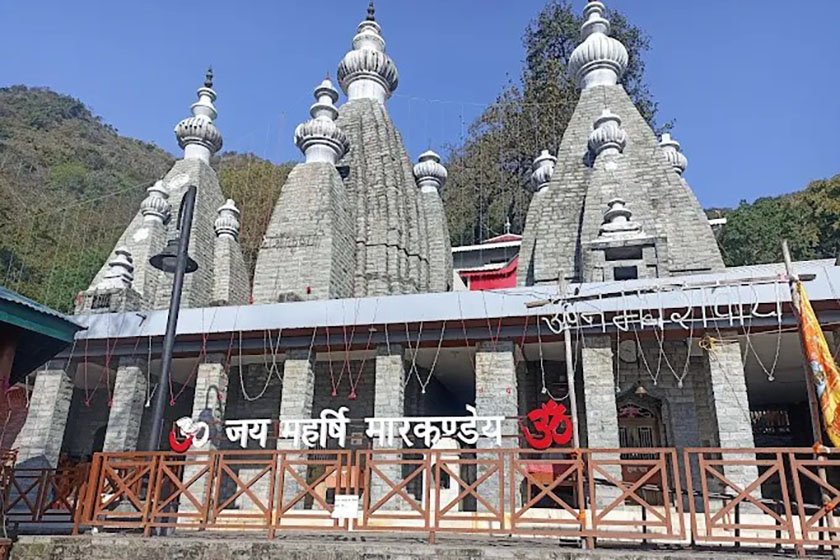
Markandeya Ji Temple should not be understood only through architecture. Public sources do not provide a detailed archaeological record, construction date, or dynastic building history for the shrine. Its importance lies more in sacred association than in monumental scale.
This is common for many rishi sites. A temple may be physically modest, but spiritually significant because of the saint remembered there. The building protects the place of worship; the story gives it depth.
The shrine’s atmosphere comes from the deity, the spring, the fair, and the devotion of people who continue to visit. Local repairs, additions, and changes may have shaped the temple over time. That does not reduce its value. Living temples often change because communities keep caring for them.
A visitor should look beyond stone or paint. The real architecture of Markandeya Ji Temple is built from water, legend, prayer, and repeated footsteps.
📜 Markandeya in Hindu Sacred Memory
Rishi Markandeya is not a local figure only. He appears across major Hindu sacred literature and is associated with the Markandeya Purana, one of the eighteen Mahapuranas. He is also remembered in the Mahabharata and other traditions as a sage of extraordinary longevity, wisdom, and spiritual vision.
His story crosses several devotional worlds. Shaivites honour him as the child-devotee saved by Shiva. Shakta traditions remember the Markandeya Purana because it contains the famous Devi Mahatmya / Durga Saptashati, one of the most important texts of goddess worship. Vaishnavite traditions also remember Markandeya through stories of cosmic dissolution and divine vision.
This makes Markandeya a rare rishi whose memory moves across many branches of Hindu devotion. He is not restricted to one sectarian identity. He belongs to the larger world of tapasya, wisdom, and divine grace.
At Bilaspur, this wide sacred memory becomes local. The Rishi is not only in scripture. He is present in a temple, a spring, a fair, and a hill district’s devotional calendar.
🎉 Festivals and Devotion
- Baisakhi fair: The temple is strongly associated with a Baisakhi fair, when devotees gather at Markandeya, perform rituals, and take a holy dip in the sacred spring. Confirm current dates and arrangements locally before travelling.
- Jhanda ritual: Recent local reporting mentions the fair beginning with a traditional jhanda ceremony, marking the start of the devotional gathering.
- Sacred bathing: Bathing in the spring is an important act of faith for many devotees, especially during Baisakhi.
- Shiva devotion: Because Rishi Markandeya’s legend is deeply connected with Lord Shiva, Mondays, Mahashivratri, and Shravan may hold special meaning for devotees, though local temple arrangements should be confirmed.
- Prayers for children and health: Devotees may visit for blessings related to children, protection, long life, and well-being.
- Quiet meditation: Many visitors come not only for ritual, but for silence and mental peace.
🏞️ While You’re in the Area
- Jukhala: The nearest important local reference point for reaching the Markandeya side and understanding nearby village routes.
- Bilaspur Town: A practical base for food, transport, markets, accommodation, and combining the visit with other sacred sites.
- Laxmi Narayan Mandir, Bilaspur: A town temple dedicated to Lord Vishnu and Goddess Lakshmi, located near the bus stand side.
- Baba Nahar Singh Temple, Dholra: A major local devta shrine of Bilaspur, associated with Baba Nahar Singh Ji and his sacred kharaun.
- Maa Santoshi Temple, Dholra: A local shrine dedicated to Maa Santoshi, especially meaningful for Friday vrat devotees.
- Gobind Sagar Lake: The large reservoir that shapes modern Bilaspur’s landscape and gives the district its water-and-hill identity.
- Naina Devi Temple: One of Himachal’s major Shakti shrines, suitable for travellers planning a larger Bilaspur district pilgrimage route.
🙏 Getting in Touch
There is no widely verified official website, booking system, or formal public temple contact number consistently available for Markandeya Ji Temple in accessible public sources. For current darshan access, Baisakhi fair arrangements, bathing rules, priest availability, road conditions, and local customs, ask in Jukhala, Bilaspur town, or nearby villages.
If travelling during the Baisakhi fair, confirm traffic, parking, and crowd arrangements in advance. The site can become much busier during fair days than on ordinary visits.
As with all living shrines, remove shoes where required, keep the spring area clean, avoid loud behaviour, do not throw waste near the water, and ask before photographing the sanctum or ritual bathing areas.
❓ Quick Questions Travellers Ask
Where is Markandeya Ji Temple located?
Markandeya Ji Temple is located in Bilaspur district, Himachal Pradesh, around 20 km from Bilaspur town, near the Jukhala / Markandeya side.
Who is worshipped at Markandeya Ji Temple?
The temple is dedicated to Rishi Markandeya, the sage remembered for his devotion to Lord Shiva and victory over untimely death.
What is the main legend of Rishi Markandeya?
The legend says Markandeya was destined to die young, but he held onto a Shiva lingam in devotion. Lord Shiva protected him from Yama and blessed him with long life.
Is there a sacred spring at the temple?
Yes. The temple is associated with a sacred spring, believed locally to have healing or medicinal qualities.
When is the main fair held?
The main fair is associated with Baisakhi, around mid-April. Local dates and arrangements should be confirmed before visiting.
Do devotees bathe at the spring?
Yes. During the Baisakhi fair, devotees take a holy dip in the spring as an act of faith.
Is there a trek to reach the temple?
No major trek is required. The temple is road-accessible, though local route conditions should be checked.
What is the best time to visit?
The cooler months from October to March are comfortable. Baisakhi is the most important fair period, but it is also busier.
Can it be combined with other Bilaspur temples?
Yes. It can be combined with Laxmi Narayan Mandir, Baba Nahar Singh Temple, Maa Santoshi Temple, and other Bilaspur sacred sites.
Are photos allowed inside?
Photography rules may depend on local custom. Ask before photographing the sanctum, spring, or ritual bathing areas.
A Last Word
Markandeya Ji Temple is a place where the story of death becomes a story of faith. The Rishi remembered here did not defeat death through pride or power. He held on to Shiva with complete devotion, and grace answered.
In Bilaspur, that old story flows beside a spring. Devotees come to bathe, pray, sit, remember, and ask for protection. The temple may not be monumental in scale, but its meaning is deep: life is fragile, fear is real, and faith must be held most tightly when the noose comes closest.
Near Jukhala, Markandeya Ji’s shrine keeps that lesson alive — in water, worship, and the quiet hope of long life.
Fact-check note: Available public references consistently identify Markandeya Ji Temple / Markandeya Rishi Temple as a shrine dedicated to Rishi Markandeya, located around 20 km from Bilaspur town near the Jukhala / Markandeya side. Travel references mention a sacred spring near the temple, believed locally to have healing or medicinal qualities. Recent local reporting confirms the Baisakhi fair tradition, including the jhanda ritual and ritual bathing by devotees. The wider legend of Rishi Markandeya’s devotion to Lord Shiva and protection from Yama is part of pan-Indian Hindu sacred tradition and is treated here as devotional mythology rather than site-specific historical proof. Exact construction date, founder, formal temple contact details, daily timings, and temple-specific elevation are not firmly verified in accessible public sources, so this article avoids forcing those claims.