
- Inner Line Permit is mandatory for Nubra Valley and can be obtained online or in Leh within 24 hours
- Khardung La Pass at 17,582 ft is the gateway to Nubra Valley and requires acclimatization in Leh for 2-3 days
- Best time to visit is June to September when roads are open and weather permits comfortable travel
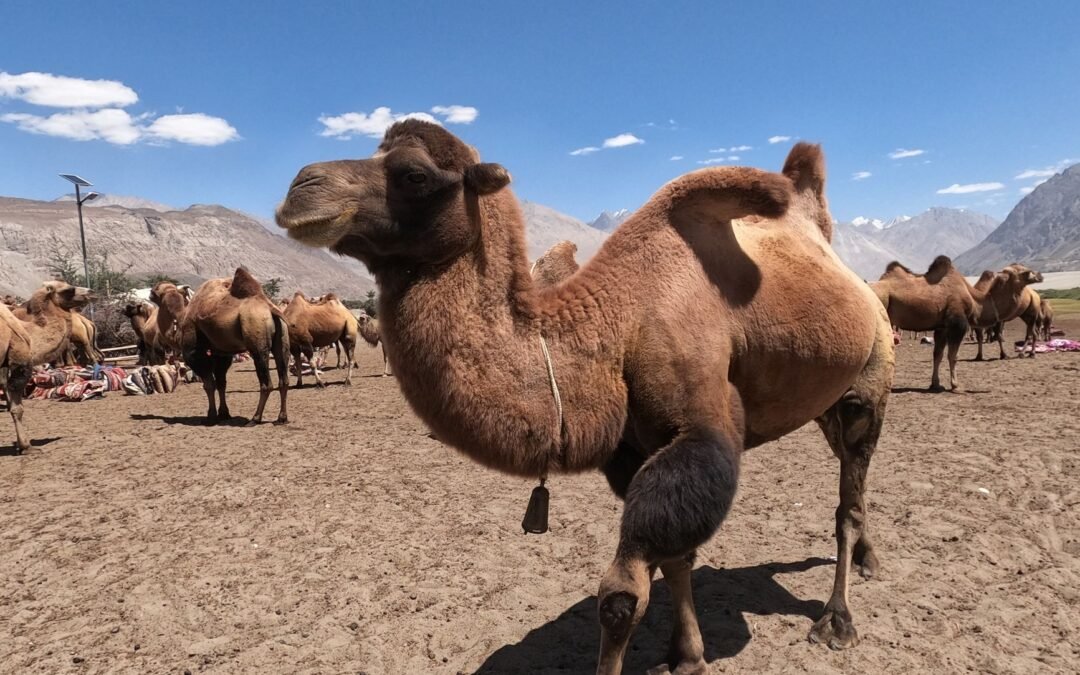
- Double-humped Bactrian camels at Hunder sand dunes are unique to this region in India
- Mobile connectivity is limited; BSNL works best, and cash is essential as ATMs are scarce
Introduction
Imagine a landscape so surreal that it feels plucked from another planet—where twin-humped Bactrian camels amble across white sand dunes with snow-capped Himalayan peaks towering in the background, where ancient monasteries cling to rocky outcrops, and where the confluence of two rivers creates a valley of extraordinary beauty. This is Nubra Valley, a high-altitude cold desert in Ladakh that stands as one of India’s most mesmerizing and otherworldly destinations. Situated at an average altitude of 10,000 feet, this remote valley offers travellers an experience that seamlessly blends stark natural beauty with rich Buddhist culture, adventure with serenity, and accessibility with the thrill of exploring one of the world’s most dramatic landscapes.
Nubra Valley, whose name derives from ‘Ldumra’ meaning the valley of flowers, extends northward from Leh across the mighty Khardung La pass—one of the world’s highest motorable roads. The valley is formed by the convergence of the Shyok and Nubra (or Siachen) rivers, creating a unique tri-armed configuration that encompasses the villages of Diskit, Hunder, Turtuk, and Sumur among others. What makes this destination particularly captivating is its dual personality: while the landscape presents an austere, almost Martian terrain with its barren mountains and cold desert, the valley floor bursts with greenery, apricot orchards, and traditional Ladakhi villages that have preserved their way of life for centuries.
For the intrepid Indian traveller seeking something beyond the usual hill station circuit, and for international tourists wanting to experience the magic of the Himalayas at its most raw and pristine, Nubra Valley offers an unforgettable journey. Whether you’re riding a double-humped camel at Hunder, exploring the centuries-old Diskit Monastery with its towering Maitreya Buddha statue, driving through the dramatic Khardung La, or simply sitting by the Shyok River watching the play of light on the mountains, every moment in Nubra feels like a privilege—a chance to witness nature’s grand theatre at one of its most spectacular venues.
Quick Facts About Nubra Valley
| Altitude | 3,000 to 3,200 meters (10,000 feet average) |
|---|---|
| Best Time to Visit | May to September (peak: June to August) |
| Distance from Nearest City | 150 km from Leh via Khardung La |
| Nearest Airport | Kushok Bakula Rimpochee Airport, Leh (150 km) |
| Permits Required | Yes – Inner Line Permit (ILP) mandatory for Indians; Protected Area Permit (PAP) for foreigners |
| Temperature Range | Summer: 20°C to 30°C (day), 5°C to 10°C (night); Winter: -10°C to -30°C |
| Approx Budget per Day in INR | ₹2,500 – ₹5,000 (budget to mid-range); ₹8,000+ (luxury) |
Why Visit Nubra Valley
Nubra Valley’s uniqueness lies in its extraordinary geographical paradox. This is one of the rare places on Earth where you can experience a cold desert ecosystem at high altitude—complete with sand dunes—surrounded by snow-covered peaks reaching above 6,000 meters. The Hunder sand dunes, stretching across the valley floor, create a surreal juxtaposition where visitors can ride Bactrian camels (the double-humped variety that was once essential to the ancient Silk Route caravans) with the Karakoram mountains forming a dramatic backdrop. These camels, found in only a handful of places worldwide, are descendants of the animals that once traversed these very routes carrying goods between Central Asia and the Indian subcontinent.
The valley serves as a living museum of Buddhist culture and heritage. The Diskit Monastery, founded in the 14th century, houses a 106-foot statue of Maitreya Buddha that overlooks the valley—a relatively recent addition (consecrated in 2010) that has become an iconic landmark. Unlike more touristy Buddhist sites, the monasteries here—including Hunder Monastery, Samstanling Monastery in Sumur, and Ensa Monastery—maintain their authentic character, with resident monks going about their daily rituals, prayer flags fluttering in the wind, and ancient murals and scriptures preserved within their walls. The morning and evening prayer ceremonies offer visitors a genuine glimpse into Tibetan Buddhist practices.
Another compelling reason to visit Nubra is the opportunity to explore Turtuk village, which was part of Pakistan until 1971 and represents the last Indian settlement before the Pakistan-occupied territories. This Balti village offers a completely different cultural experience, with its own language, cuisine, and traditions distinct from mainstream Ladakhi culture. The village’s apricot and walnut orchards, traditional wooden houses, and warm hospitality provide an authentic cultural immersion rarely found in more commercialized destinations. The journey to Turtuk along the Shyok River is an adventure in itself, with the road hugging dramatic cliffs and offering views that will leave you breathless—both from altitude and sheer beauty.

How to Reach Nubra Valley
By Air and Road: The most common route involves flying to Kushok Bakula Rimpochee Airport in Leh, which is well-connected to major Indian cities. Direct flights operate from Delhi (₹8,000-₹15,000 return), Mumbai (₹10,000-₹20,000 return), and Srinagar (₹4,000-₹8,000 return). From Leh, Nubra Valley is 150 km away via the legendary Khardung La pass (5,359 meters). This journey typically takes 5-6 hours depending on road conditions and acclimatization stops. Important: Spend at least 2-3 days in Leh before traveling to Nubra to properly acclimatize to the high altitude.
Shared Taxis: The most economical option from Leh is shared taxis or mini-buses that operate regularly during the tourist season (May-September). These cost approximately ₹800-₹1,200 per person one-way and depart early morning from the Leh taxi stand. The journey includes a brief stop at Khardung La for photographs and tea. Booking a day in advance is recommended during peak season.
Private Taxis: For more flexibility and comfort, private taxis can be hired from Leh to Nubra Valley. A one-way drop costs around ₹4,500-₹6,000, while round-trip packages (typically 2-3 days) cost ₹8,000-₹12,000 depending on the vehicle type (Innova, Xylo, or similar). You can hire taxis through your hotel in Leh or from the registered taxi operators’ union. Private vehicles allow you to stop for photography and explore at your own pace.
Motorcycle/Bike: Adventure enthusiasts often choose to ride to Nubra Valley, either on their own motorcycles or rental bikes available in Leh. Royal Enfield rentals cost ₹1,500-₹2,500 per day, while adventure bikes like Himalayan or KTM cost ₹2,000-₹3,000 per day. The ride over Khardung La is spectacular but challenging, requiring experience with high-altitude mountain riding. Ensure your bike is in excellent condition and carry spare fuel as petrol pumps are limited.
By Road from Manali: The adventurous Manali-Leh highway (479 km) is open from June to September. This iconic route takes 2 days with an overnight stop at Sarchu or Keylong, offering spectacular scenery but requiring good acclimatization planning. Public buses operate between Manali and Leh (₹1,500-₹2,000), while private taxis cost ₹15,000-₹20,000. From Leh, continue to Nubra as described above.
Best Time to Visit Nubra Valley
May to September: This is the primary tourist season when Nubra Valley is fully accessible. The Khardung La pass typically opens in late April or early May, though heavy snowfall can cause temporary closures even during these months. May to June offers comfortable daytime temperatures (20-25°C) with cool nights, blooming apricot trees, and relatively fewer tourists compared to July-August. The landscape is at its greenest, with barley fields creating a patchwork of colors across the valley floor. This period is ideal for photography and outdoor activities.
July to August: Peak tourist season brings pleasant weather with daytime temperatures reaching 25-30°C. All accommodations and restaurants are fully operational, and activities like camel safaris, river rafting, and monastery visits are in full swing. However, this is also the busiest period, with accommodations booking up quickly and prices at their highest. Occasional rain showers can occur, though Nubra receives minimal precipitation. The advantage is guaranteed road access (barring landslides) and the vibrant atmosphere of villages bustling with visitors and festivals.
September: One of the best times to visit for those seeking fewer crowds while still enjoying good weather. Temperatures remain comfortable during the day (15-20°C) though nights get colder (5-10°C). The harvest season brings a different kind of beauty to the valley, with golden barley fields and villagers engaged in traditional farming activities. Accommodation prices begin to drop, and you’ll have a more intimate experience at monasteries and tourist sites. Some festivals and cultural events occur during this month.
October to April: Nubra Valley becomes largely inaccessible during winter as Khardung La receives heavy snowfall and closes to traffic. Temperatures plummet to -20°C or lower, and most tourist accommodations shut down. Only a few homestays remain open for the rare adventurer willing to brave extreme conditions. While the winter landscape is starkly beautiful, the challenges of access, extreme cold, and limited facilities make this period suitable only for experienced cold-weather travelers with proper equipment and local contacts.
Top Things to Do in Nubra Valley
Ride Bactrian Camels at Hunder Sand Dunes
The double-humped Bactrian camels at Hunder are descendants of the animals that once plied the Silk Route through this region. A camel ride across the white sand dunes with the snow-capped Karakoram range in the background is an experience that perfectly captures Nubra’s surreal character. Rides typically last 20-30 minutes and cost ₹300-₹400 per person. The best time for photography is late afternoon when the light is golden, and the shadows on the dunes create dramatic patterns. The camel handlers are local villagers who share fascinating stories about the area’s history as a crucial trade route.
Explore Diskit Monastery and Maitreya Buddha
Perched on a hilltop overlooking the Nubra Valley, Diskit Monastery is the oldest and largest Buddhist monastery in the region, belonging to the Gelugpa (Yellow Hat) sect. The monastery houses ancient murals, manuscripts, and a magnificent prayer hall where monks conduct ceremonies. The highlight is the 106-foot statue of Maitreya Buddha inaugurated by the Dalai Lama in 2010, which can be seen from miles away. The statue’s face points toward Pakistan, symbolizing protection for the region. The climb to both the monastery and the statue offers panoramic valley views, and entry costs ₹30-₹50 with additional charges for photography.
Visit Turtuk – India’s Northernmost Village
Turtuk, a Balti village that became part of India in 1971, offers a unique cultural experience distinct from mainstream Ladakhi culture. Located 205 km from Leh (about 3 hours from Diskit), this village features apricot orchards, traditional wooden houses with intricate carvings, and a museum showcasing Balti heritage. The locals speak Balti language, prepare unique dishes like marzan (apricot kernel oil) and khambir (local bread), and maintain customs closer to Central Asian traditions. Walking through the village’s narrow lanes, visiting the old polo ground, and interacting with friendly residents provides authentic cultural immersion. The royal house of Turtuk, once the residence of the local yabgo (king), is now a museum worth visiting.
Experience Monastery Rituals at Samstanling Gompa
Located in Sumur village, Samstanling Monastery offers a more intimate monastic experience compared to the larger Diskit monastery. Built in 1841, this beautiful monastery houses around 80 monks and features spectacular murals and a large statue of Tsongkhapa, founder of the Gelugpa sect. Attending the morning prayers (usually 6-7 AM) provides an authentic glimpse into monastic life, with young monks chanting scriptures, playing traditional instruments, and performing rituals that have remained unchanged for centuries. The monastery also has a small guesthouse where visitors can stay for a truly immersive experience (₹800-₹1,200 per night).

Trek to Ensa Monastery and Hot Springs
A relatively easy 3-4 km trek from Sumur village leads to the enchanting Ensa Monastery, nestled in a narrow gorge with dramatic rock formations. The monastery, though smaller than others in the valley, boasts beautiful wall paintings and offers solitude often absent at more popular sites. Near Panamik village (10 km from Sumur), natural hot springs provide a therapeutic experience, with locals believing the sulfurous waters have healing properties. Simple bathing facilities are available (₹50-₹100), and soaking in the warm waters while surrounded by barren mountains creates a memorable experience, especially during cooler months.
River Rafting on Shyok River
For adventure seekers, rafting on the Shyok River offers thrilling rapids combined with spectacular scenery. Operating from June to September, rafting expeditions range from short 2-hour trips (₹1,500-₹2,000 per person) to full-day adventures (₹3,000-₹4,500). The rapids range from Grade II to Grade III, suitable for both beginners and intermediate rafters. Several operators in Hunder and Diskit organize trips with experienced guides and safety equipment. The journey takes you past towering cliffs, remote villages, and diverse birdlife including lammergeiers and golden eagles soaring overhead.
Where to Stay in Nubra Valley
Budget Accommodations (₹800-₹2,000 per night): Nubra Valley offers numerous budget-friendly guesthouses and homestays that provide clean, basic accommodation with attached bathrooms and home-cooked meals. Organic Retreat Hunder offers simple rooms at ₹1,000-₹1,500 with shared facilities and organic meals prepared by the host family. Yarab Tso Guesthouse in Sumur provides traditional Ladakhi hospitality at ₹800-₹1,200 per night with breakfast included. Stone Hedge Guest House in Hunder charges ₹1,200-₹1,800 and features a beautiful garden and proximity to the sand dunes. Most budget properties offer basic amenities like hot water (sometimes solar-heated), electricity (often with backup generators), and simple meals at ₹150-₹300 per plate.
Mid-Range Accommodations (₹2,500-₹6,000 per night): Several comfortable hotels and camps offer better facilities while maintaining reasonable prices. Nubra Ethnic Camp in Hunder features well-appointed tents with attached bathrooms, hot water, and restaurant facilities at ₹3,500-₹5,000 per night including meals. The Himalayan Camp offers luxury tents with comfortable beds, electricity, and valley views at ₹4,000-₹6,000 with breakfast and dinner. Karma Inn in Diskit provides hotel-style rooms with modern amenities at ₹2,500-₹4,000, along with a multi-cuisine restaurant. Hunder Sarai Resort combines traditional architecture with contemporary comfort at ₹3,000-₹5,000 per night and features a beautiful property with organic gardens.
Splurge/Luxury Accommodations (₹8,000+ per night): For those seeking premium experiences, Nubra has developed several high-end properties. The Olthang Camp, situated between Hunder and Diskit, offers luxurious Swiss tents with attached bathrooms, heating, and gourmet meals at ₹10,000-₹15,000 per night all-inclusive. Mystique Meadows Earth Homes in Sumur features innovative eco-friendly cottages built into the earth with modern amenities and stunning mountain views at ₹8,000-₹12,000 per night. Nubra Organic Retreat provides luxury tents with all modern facilities, organic cuisine from their gardens, and cultural programs at ₹9,000-₹14,000 per night. These properties typically include all meals, airport transfers, and activities, offering complete packages for a hassle-free experience.
Local Food & Cuisine
Nubra Valley’s cuisine reflects its position along the ancient Silk Route, blending Ladakhi, Tibetan, and Central Asian influences. Thukpa, a hearty noodle soup with vegetables or meat, is ubiquitous and perfect for the cool climate. The local version often includes hand-pulled noodles and is more richly spiced than the Tibetan original, costing ₹120-₹200 per bowl. Skyu, a traditional Ladakhi dish rarely found outside the region, features thumb-sized wheat dough pieces cooked with vegetables and sometimes meat in a thick, flavorful stew. This filling dish (₹150-₹250) is particularly popular during colder months and represents authentic home-style Ladakhi cooking.
Khambir, the local sourdough bread, is baked fresh daily in traditional earthen ovens and served with butter tea (gur-gur chai) or apricot jam made from the valley’s abundant apricots. The bread has a unique slightly sour taste and dense texture, selling for ₹20-₹40 per piece. Tingmo, steamed Tibetan bread similar to Chinese mantou, is another staple served with vegetable or meat curries. In Turtuk, don’t miss marzan, a unique dish made with apricot kernel oil and buckwheat flour, representing the distinct Balti cuisine (₹100-₹150 per serving).
Recommended Eateries: Dolma Restaurant in Hunder serves excellent traditional Ladakhi and Tibetan food with mains ranging from ₹150-₹300. Their momos (steamed or fried dumplings) are particularly praised, costing ₹100-₹150 for a plate of eight pieces. Old Sumur Cafe in Sumur village offers authentic home-style cooking in a beautiful garden setting with dishes priced at ₹120-₹250. Roof Top Restaurant at Diskit provides multi-cuisine options including Indian, Chinese, and continental dishes (₹180-₹350) along with panoramic valley views. Baltistan Cafe in Turtuk specializes in Balti cuisine and homemade apricot products, with meals costing ₹150-₹250 and apricot oil available for purchase at ₹200-₹300 per bottle.
Practical Travel Tips for Nubra Valley
Permits: Indian nationals require an Inner Line Permit (ILP) to visit Nubra Valley, while foreign nationals need a Protected Area Permit (PAP). ILPs can be obtained online through the official Ladakh tourism website or in person at the DC Office in Leh at ₹400 for a week-long permit covering Nubra, Pangong, and other restricted areas. The process requires passport-size photographs and ID proof. Most hotels and travel agencies in Leh can arrange permits for ₹500-₹700, saving time and hassle. Foreign nationals need to apply through registered travel agencies and pay ₹600 per person. Permits are checked at multiple checkpoints, so carry them at all times along with original photo ID.
Mobile Network and Internet: Mobile connectivity in Nubra Valley is limited and unreliable. BSNL and occasionally Airtel provide patchy coverage in Diskit and Hunder main areas, but signals are weak or non-existent in Sumur, Turtuk, and along the roads. Most accommodations lack Wi-Fi or offer very slow connections. Plan accordingly and inform family/friends about communication limitations before departure. The lack of connectivity can be liberating, allowing for a genuine digital detox.
ATM and Cash: There is ONE ATM in Diskit (SBI), which frequently runs out of cash or experiences technical issues. No ATMs exist in other parts of Nubra Valley. Carry sufficient cash from Leh to cover all expenses including accommodation, food, permits, and emergencies. Most establishments don’t accept cards, though some upscale hotels may accept payment via online transfer if internet is available. Budget ₹5,000-₹8,000 per person for a 2-3 day trip, more if staying at luxury properties.
Medical Facilities: Medical infrastructure is basic, with small government health centers in Diskit and Hunder capable of handling minor ailments only. The nearest hospital is in Leh, 5-6 hours away. Carry a comprehensive first-aid kit including altitude sickness medication (Diamox), pain relievers, anti-diarrheal medicine, bandages, antiseptic cream, and any personal prescription medications. Altitude sickness can occur even in Nubra despite it being lower than Leh. Watch for symptoms like severe headache, nausea, and breathlessness, and descend immediately if they worsen.
What to Pack: Even in summer, temperatures drop significantly at night, so pack layers including thermal wear, fleece jacket, windproof outer layer, warm socks, and gloves. Sun protection is crucial—bring high-SPF sunscreen, sunglasses with UV protection, lip balm, and a wide-brimmed hat. The sun’s intensity at this altitude can cause severe burns within hours. Carry reusable water bottles, water purification tablets, energy bars, basic toiletries (availability is limited), torch/headlamp, power bank, and any specific medications. Good trekking shoes are essential for monastery visits and sand dune walks. A small backpack for day trips is useful.
Altitude and Health: While Nubra Valley (3,000-3,200m) is lower than Leh (3,500m), the journey over Khardung La (5,359m) exposes you to extreme altitude. Never travel to Nubra immediately upon arriving in Leh—spend minimum 2-3 days acclimatizing in Leh first. Stay well-hydrated (4-5 liters of water daily), avoid alcohol and smoking, eat light meals, and don’t overexert yourself during the first 24 hours in the valley. Acute Mountain Sickness (AMS) can be serious; descend immediately if symptoms persist despite medication and rest.
Responsible Tourism: Nubra Valley’s fragile ecosystem and traditional culture face increasing pressure from tourism. Practice responsible travel by carrying all non-biodegradable waste back to Leh, using water sparingly (it’s a scarce resource), respecting monastery rules and photography restrictions, dressing modestly especially when visiting religious sites, asking permission before photographing locals, and buying directly from local artisans and farmers to support the community. Avoid purchasing wildlife products. Many accommodations now practice sustainable tourism—support these initiatives by choosing eco-friendly properties even if slightly more expensive.
Safety: Nubra Valley is generally very safe with low crime rates and friendly locals. However, road conditions can be treacherous, especially over Khardung La where landslides, sudden weather changes, and thin air create hazards. Travel during daylight hours only, use experienced drivers, and never attempt the journey in bad weather. River crossings exist on some routes—avoid crossing during afternoon when glacial melt increases water levels. Women travelers report feeling safe, though traveling in groups or with registered guides is always advisable. Register your trip details with your hotel in Leh and inform them of your expected return.
Final Thoughts
Nubra Valley represents everything that makes Himalayan travel extraordinary—dramatic landscapes that defy imagination, ancient cultures preserved in their authentic form, adventures that challenge and reward in equal measure, and moments of quietude that stay with you long after you’ve returned to civilization. This is not a destination for those seeking creature comforts and convenience at every turn; it demands some hardship, patience with basic facilities, and respect for the harsh environment. Yet these very challenges make the rewards sweeter. When you stand at the Hunder sand dunes with a double-humped camel beside you and snow peaks all around, or sit in a centuries-old monastery listening to monks chant prayers that echo through time, you’ll understand why travelers speak of Nubra in reverential tones.
Whether you’re an Indian traveler exploring your country’s incredible diversity or an international visitor seeking experiences off the beaten path, Nubra Valley delivers something profoundly transformative. The valley reminds us that some of Earth’s most beautiful places require effort to reach, patience to understand, and humility to appreciate. So plan your acclimatization carefully, pack your warm clothes and open mind, secure your permits, and prepare for a journey that will expand your understanding of what India holds within its borders. Nubra Valley isn’t just a destination—it’s a journey through geology, history, culture, and ultimately, through yourself. The valley awaits, timeless and magnificent, ready to share its secrets with those willing to make the journey.
- Start your journey to Nubra Valley early morning around 6 AM to cross Khardung La before afternoon winds make driving dangerous
- Stay overnight in Hunder or Diskit rather than doing a day trip to properly acclimatize and enjoy sunset at sand dunes
- Carry sufficient cash as only Diskit has one ATM which is often non-functional; no card payments available in most places
- Visit Diskit Monastery before 1 PM as it closes for afternoon prayers and book camel rides in advance during peak season
- Fill fuel in Leh as petrol pumps in Nubra Valley are unreliable and often run out of stock during tourist season
Frequently Asked Questions about Nubra Valley
The best time to visit Nubra Valley is from May to September, with peak season being June to August when the weather is most favorable and all roads are accessible. During these months, temperatures are pleasant, the valley is in full bloom, and all tourist activities including camel rides at Hunder sand dunes are operational.
Nubra Valley is situated at an average altitude of 10,000 feet (3,000 to 3,200 meters) above sea level. It is located approximately 150 km from Leh, accessible via the famous Khardung La pass, one of the world’s highest motorable roads.
Yes, permits are mandatory to visit Nubra Valley. Indian citizens require an Inner Line Permit (ILP), while foreign tourists need a Protected Area Permit (PAP). These permits can be obtained in Leh through travel agencies or online portals.
The main attractions in Nubra Valley include the white sand dunes at Hunder with double-humped Bactrian camels, Diskit Monastery featuring a towering Maitreya Buddha statue, the confluence of Shyok and Nubra rivers, and picturesque villages like Turtuk and Sumur. The journey through Khardung La pass itself is a major highlight.
Nubra Valley is famous for being a high-altitude cold desert with unique white sand dunes, rare double-humped Bactrian camels, ancient Buddhist monasteries, and breathtaking Himalayan landscapes. The valley’s name derives from ‘Ldumra’ meaning “valley of flowers” and it offers a surreal combination of barren mountains, greenery, apricot orchards, and traditional Ladakhi culture.
The nearest airport to Nubra Valley is Kushok Bakula Rimpochee Airport in Leh, which is approximately 150 km away. From Leh, visitors need to travel by road via Khardung La pass to reach Nubra Valley, which typically takes 5-6 hours.