On a mountain spur above Mandi, Rewalsar holds a lake, a gurdwara, monasteries, temples, floating reed islands, and one of Himachal’s rare sacred landscapes where three traditions meet without needing to become one.
Some sacred places are famous because one story dominates them. Rewalsar is different. The lake is known as Rewalsar in Himachal’s local and official usage, and as Tso Pema — the Lotus Lake — in Tibetan Buddhist tradition. Around its water stand Buddhist monasteries, Hindu temples, and Gurdwara Shri Rewalsar Sahib, each carrying its own memory of the place. For Buddhists, Rewalsar is linked with Guru Padmasambhava / Guru Rinpoche, the great tantric master associated with the spread of Vajrayana Buddhism to Tibet. For Sikhs, it is remembered through Guru Gobind Singh Ji’s visit and his meeting with hill rulers. For Hindus, it is connected with Sage Lomas, Lord Shiva, Lord Krishna, and the nearby sacred lake-and-temple geography. Rewalsar’s beauty is not that these traditions are blurred together. Its beauty is that each remains present beside the same water.
🌄 Location & How to Reach It
Rewalsar Lake is located in Mandi district, Himachal Pradesh, on a mountain spur above the Balh side of Mandi. The official District Mandi page places Rewalsar about 24 km by road from Mandi, while HPTDC describes it as roughly an hour’s drive from Mandi. The lake is ringed by shrines, monasteries, a gurdwara, houses, guesthouses, shops, and walking paths, making it both a pilgrimage centre and a small sacred town.
Google Maps: Get Directions
Elevation: commonly cited around 1,360 metres, though official public pages often focus more on access and sacred importance than exact elevation.
- By road: Rewalsar is reached by road from Mandi, about 24 km away. Buses and taxis are available from Mandi, and travellers can also approach from Ner Chowk, Sundernagar, Bilaspur, or Kullu side depending on route.
- By rail: The official District Mandi page lists the nearest rail link as the Joginder Nagar narrow-gauge line, about 78 km away. For broad-gauge railway access, most travellers use Chandigarh, Kiratpur Sahib, or Una, followed by road travel.
- By air: The official District Mandi page gives Bhuntar Airport in Kullu district as the nearest airport, about 84 km away.
This is an easy road-accessible sacred site by Himachal standards. The road is hilly but not a high-pass route, and Rewalsar can be visited as a day trip from Mandi or as a quiet overnight stay.
🌸 Best Time to Visit
Rewalsar can be visited throughout the year. The most comfortable months are usually March to June and September to November, when the weather is pleasant for walking around the lake, visiting the shrines, and exploring the nearby hilltop temples and small lakes.
Winter can be cold, especially in the morning and evening. HPTDC notes that winter temperatures can hover around freezing point and heavy woollens may be required, while summer is milder. That simple difference matters because Rewalsar is best experienced slowly — walking, sitting, circumambulating, visiting shrines, and watching the lake change with light.
The most important shared public bathing occasion mentioned by District Mandi is Baisakhi, when people of different religions come to Rewalsar for a holy bath. Buddhist pilgrims may also visit during dates connected with Guru Padmasambhava, while Hindu devotees visit temples around the lake throughout the year. Specific monastery pujas, gurdwara events, or temple rituals should be confirmed locally.
Monsoon makes the hills green, but roads around Mandi district can face landslides or delays after heavy rain. If visiting during July–August, check road conditions before travelling.
🪷 Tso Pema and the Miracle of Padmasambhava
For Tibetan Buddhists, Rewalsar is Tso Pema, the Lotus Lake. The official District Mandi page records the belief that Padmasambhava used his great powers to take flight to Tibet from Rewalsar, and that the tiny floating reed islands in the lake are believed to carry his spirit. HPTDC also describes Rewalsar as the place from where Padmasambhava left for Tibet, where he became known as Guru Rinpoche, the Precious Master.
The deeper Buddhist story is connected with Princess Mandarava of Zahor, the old region often associated with Mandi. In Tibetan tradition, Mandarava became a consort and disciple of Padmasambhava. When their spiritual practice angered the local king, Padmasambhava was said to have been burned, but instead of being destroyed, he appeared in the middle of a lake on a lotus. This is why the name Tso Pema, or Lotus Lake, carries such sacred force.
This story should not be reduced to a simple miracle line. For Buddhist pilgrims, it is a place of transformation: fire becomes lake, punishment becomes awakening, and the guru appears on a lotus instead of dying in flames. That is why the large statue of Padmasambhava above the lake feels so natural here. It does not simply decorate the skyline. It watches over the story that made the lake sacred.
ੴ Guru Gobind Singh Ji and the Hill Rulers
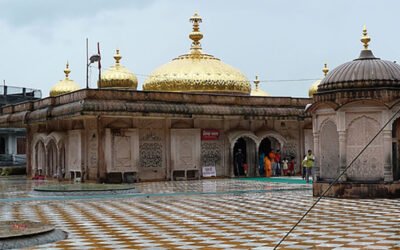
Rewalsar is also sacred to Sikhs because of its association with Guru Gobind Singh Ji, the tenth Sikh Guru. The official District Mandi page states that Gurdwara Shri Rewalsar Sahib is associated with Guru Gobind Singh Ji, who called upon the Pahari Rajas to unite in his struggle against the Mughals. HPTDC adds that the gurdwara was built in 1930 by Raja Joginder Sen of Mandi, commemorating Guru Gobind Singh Ji’s visit.
This gives Rewalsar a different kind of historical memory from many other lake shrines. The Sikh association is not only contemplative; it is political and strategic too. Guru Gobind Singh Ji’s visit is remembered in connection with the hill rulers and the wider conflicts of his time.
The gurdwara stands by the same lake where Buddhist and Hindu traditions also gather. A visitor may hear kirtan from one side, see monks and prayer flags on another, and notice Hindu temples along the periphery. Rewalsar does not ask these memories to compete. It allows them to stand close.
🕉️ Sage Lomas, Shiva, Krishna, and the Hindu Shore
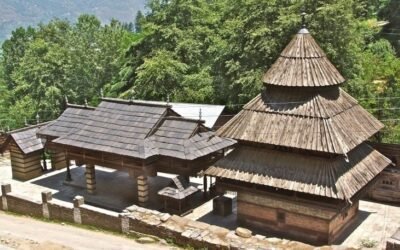
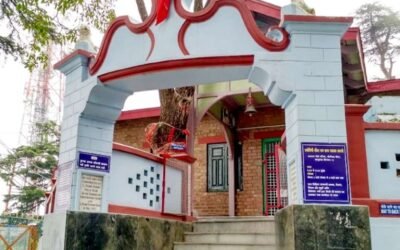
District Mandi records that Sage Lomas is believed to have performed penance at Rewalsar to please Lord Shiva, and that Hindu temples around the lake are dedicated to Lord Krishna, Lord Shiva, and Sage Lomas. HPTDC also mentions these three Hindu temples as part of the lake’s sacred landscape.
The Hindu side of Rewalsar is not only about one temple. It is about a chain of sacred geography: the lake, the temple of Lomas Rishi, Shiva worship, Krishna devotion, the nearby Naina Devi Ji Temple, and the upper lake traditions associated with Kunti and the Pandavas.
This layered Hindu memory gives Rewalsar a softer but older rhythm. The lake is a place for bathing, prayer, walking, feeding fish, and visiting temples. It is not as architecturally grand as some larger temple complexes of Himachal, but it carries a lived sacredness. People do not come only to see a building. They come to move around the lake and enter its circle of stories.
🌿 Floating Reed Islands and the Lake’s Quiet Mystery
One of the most distinctive features of Rewalsar Lake is the presence of floating reed islands. The official District Mandi page says the lake is famous for its floating reed islands and fish, and also records the belief that the spirit of Padmasambhava is embodied in these small floating reed islands.
This detail gives Rewalsar a unique visual and spiritual identity. The lake is not empty water. It carries moving patches of vegetation, fish below the surface, shrines around the edge, and stories above and below the visible world. The floating islands make the lake feel slightly alive, as if parts of it are still travelling.
A visitor walking around the lake will notice how the setting shifts from gurdwara to monastery to temple to shopfront to water again. Prayer flags may move in the breeze. Fish gather near feeding points. Bells sound from one side. Monks, Sikh pilgrims, Hindu devotees, local families, and travellers move through the same space with different intentions.
That is Rewalsar’s real atmosphere: not silence, but layered presence.
🙏 What Rewalsar / Tso Pema Is Known For
Rewalsar is known as a shared sacred site for Buddhists, Sikhs, and Hindus. District Mandi clearly describes it as important for all three communities and notes that shrines of all three traditions exist around the lake’s periphery.
For Buddhists, it is known as Tso Pema, associated with Guru Padmasambhava / Guru Rinpoche, the lotus miracle, monasteries, and the large statue overlooking the lake. For Sikhs, it is known for Gurdwara Shri Rewalsar Sahib and the visit of Guru Gobind Singh Ji. For Hindus, it is known for temples of Lord Shiva, Lord Krishna, and Sage Lomas, along with nearby Naina Devi Ji and other sacred lakes.
For general travellers, Rewalsar is known for its lake walk, floating reed islands, fish, hill views, monasteries, gurdwara, temples, and slower pace. But the place should not be treated only as a scenic stop. It is first a sacred lake. The walking path is also a parikrama. The water is not just a view. It is the centre of devotion.
🏛️ Monasteries, Gurdwara, Temples, and a Lake in the Middle
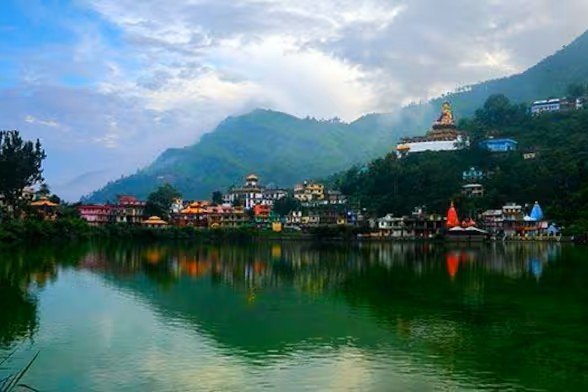
Rewalsar’s architecture is not one building. It is the arrangement of many sacred buildings around one lake. District Mandi records three Buddhist monasteries at Rewalsar, a gurdwara, and Hindu temples around the lake. HPTDC describes Tibetan monasteries at opposite ends of the lake, along with a Bhutanese monastery, the gurdwara, and the Hindu temples.
This makes Rewalsar visually different from most sacred sites in Himachal. There is no single temple tower that defines everything. Instead, the eye moves around the lake: monastery walls, prayer flags, the gurdwara’s white form, temple roofs, the Padmasambhava statue above, fish in the water, and the hills enclosing the town.
The lake itself becomes the main sanctum. Everything else faces it, circles it, or rises above it. This is why Rewalsar feels best when walked slowly. A quick stop gives only photographs. A slow parikrama gives the place its meaning.
📜 A Shared Sacred Landscape, Not a Simple Slogan
It is easy to call Rewalsar a symbol of harmony, and in one sense it is. But that phrase can become too easy. Rewalsar’s real strength is not that three traditions disappear into one. Its strength is that they remain distinct and still share the lake.
The Buddhist remembers Padmasambhava and Mandarava. The Sikh remembers Guru Gobind Singh Ji and the hill rulers. The Hindu remembers Sage Lomas, Shiva, Krishna, Naina Devi, Kunti, and the Pandavas. These are not the same story, and they do not need to become the same story.
The lake allows them to stand together without flattening them. That is rare. In many places, one tradition dominates the sacred space. At Rewalsar, the lake holds many memories at once. Its shore becomes a kind of shared threshold.
🎉 Festivals and Devotion
- Baisakhi Holy Bath: District Mandi mentions that people of all religions come to Rewalsar for a holy bath on Baisakhi. This is one of the most important shared devotional occasions at the lake.
- Buddhist Pilgrimage: Buddhist devotees visit Rewalsar as Tso Pema, connected with Guru Padmasambhava, Mandarava, the lotus miracle, monasteries, and the large Padmasambhava statue.
- Gurdwara Worship: Sikh devotees visit Gurdwara Shri Rewalsar Sahib, associated with Guru Gobind Singh Ji’s stay and meeting with hill rulers.
- Hindu Temple Visits: Devotees visit the temples of Sage Lomas, Lord Shiva, and Lord Krishna around the lake, and often combine the trip with nearby Naina Devi Ji Temple.
- Lake Parikrama: Walking around the lake is one of the simplest and most meaningful ways to experience Rewalsar. Do it respectfully, without littering or disturbing fish and birds.
🏞️ While You’re in the Area
- Padmasambhava Statue: The large statue above Rewalsar is one of the most visible landmarks of Tso Pema and gives wide views over the lake and town.
- Gurdwara Shri Rewalsar Sahib: Built in 1930 by Raja Joginder Sen of Mandi, it commemorates the visit of Guru Gobind Singh Ji.
- Buddhist Monasteries: Rewalsar has multiple monasteries around the lake, including Tibetan and Bhutanese traditions, making it an important Buddhist pilgrimage point.
- Lomas Rishi Temple: A Hindu sacred site linked with Sage Lomas, who is believed to have performed penance here for Lord Shiva.
- Naina Devi Ji Temple: Located about 10 km from Rewalsar on a hilltop, this temple is associated with the belief that Sati’s eye fell there and offers panoramic views of nearby valleys.
- Kunt Bhayo / Kunt Bhyog Lake: A sacred lake above Rewalsar, connected with Kunti and the Pandavas in local tradition.
- Mandi Town: The nearest major town, useful for accommodation, transport, old temples, food, and onward travel towards Kullu, Sundernagar, or Prashar.
🙏 Getting in Touch
Rewalsar has active monasteries, temples, and Gurdwara Shri Rewalsar Sahib, but visitors should confirm specific puja, monastery, accommodation, or gurdwara arrangements locally. For most travellers, no special booking is needed for a general lake visit and shrine darshan.
For accommodation, HPTDC operates The Tourist Inn, Rewalsar, and there are other small stays and guesthouses around the town. During Baisakhi, Buddhist pilgrimage periods, long weekends, and holiday seasons, accommodation should be planned in advance.
When visiting, cover your head where required, remove shoes before entering shrines, avoid photographing restricted areas, and treat the lake respectfully. Do not throw plastic, food packets, or religious waste into the water.
❓ Quick Questions Travellers Ask
Where is Rewalsar Lake located?
Rewalsar Lake is in Mandi district, Himachal Pradesh, about 24 km from Mandi town.
Why is Rewalsar also called Tso Pema?
In Tibetan Buddhist tradition, Rewalsar is called Tso Pema, meaning Lotus Lake, because of its connection with Guru Padmasambhava’s lotus miracle.
Which religions consider Rewalsar sacred?
Rewalsar is sacred to Buddhists, Sikhs, and Hindus, with monasteries, a gurdwara, and temples around the lake.
What is the Sikh connection with Rewalsar?
Rewalsar is associated with Guru Gobind Singh Ji, who is remembered here for meeting hill rulers during his struggle against the Mughals.
What is the best time to visit Rewalsar?
The best months are usually March to June and September to November. Baisakhi is an important holy bathing occasion at the lake.
A Last Word
Rewalsar is not powerful because it belongs to everyone in a vague way. It is powerful because it allows many sacred memories to remain clear. Guru Rinpoche does not disappear into Guru Gobind Singh Ji. Sage Lomas does not replace Mandarava. The gurdwara, monasteries, and temples do not need to compete for the lake.
They circle it.
That is the image Rewalsar leaves behind: one lake, many shores of faith. Floating reeds move slowly on the water. Fish gather near the edge. Bells, prayers, and footsteps come from different directions. The lake listens to all of them, and answers in its own quiet way.
Fact-check note: Rewalsar’s location in Mandi district, its distance of about 24 km from Mandi, and its importance for Hindus, Sikhs, and Buddhists are supported by the official District Mandi page and HPTDC. District Mandi also supports the presence of shrines of all three traditions around the lake, the floating reed islands, the Padmasambhava belief, the association with Guru Gobind Singh Ji, the 1930 gurdwara construction by Raja Joginder Sen of Mandi, the temples of Lord Krishna, Lord Shiva, and Sage Lomas, and the Baisakhi holy bath tradition. HPTDC supports the Padmasambhava / Guru Rinpoche connection, the gurdwara’s Guru Gobind Singh association, and the presence of monasteries and Hindu temples. The Mandarava and lotus-miracle story is treated as Tibetan Buddhist sacred tradition rather than archaeological history. Elevation is given as a commonly cited approximate figure because official pages checked did not foreground a precise surveyed elevation.